ATM transactions take less than a minute (not more than 30 seconds precisely), yet each one passes through several systems before the machine counts out your cash. When you understand those steps, you can also understand why ATM transactions sometimes fail, why you may pay a fee, and how fast your bank must refund a failed withdrawal. This guide explains the whole process in plain English, with the latest CBN fees and limits for Nigeria.
Quick answer: When you insert your card and enter your PIN, the ATM encrypts your request and sends it through a switch and your card network to your bank’s issuer processor. The issuer processor checks your PIN, card, and fraud rules, then asks your bank’s core system to approve the debit. If both say yes, the ATM dispenses cash and your account is debited. Later, settlement pays back the bank that owns the ATM.
In this guide
- What is an ATM transaction?
- How ATM transactions work, step by step
- What does an issuer processor do?
- On-us vs not-on-us ATM transactions
- How much do ATM transactions cost in Nigeria?
- ATM withdrawal limits in 2026
- Why ATM transactions fail
- What to do if the ATM keeps your card
- How to keep your ATM transactions safe
- Frequently asked questions
- Key takeaways
What is an ATM transaction?
ATM stands for automated teller machine. In simple terms, it is a self-service bank counter that works around the clock.
An ATM transaction is any request you make at the machine. Most ATM transactions are cash withdrawals. However, many ATMs also let you check your balance, change your PIN, buy airtime, or pay bills.
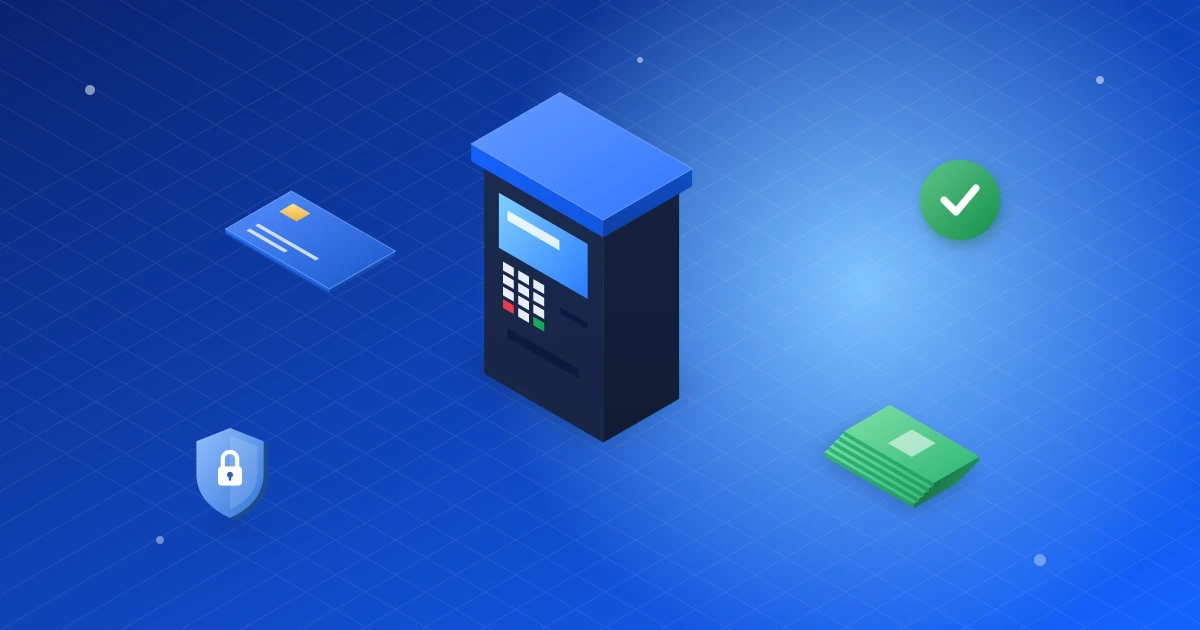
Each ATM has a few key parts:
- Card reader: reads the chip or magnetic stripe on your card.
- Encrypting PIN pad: scrambles your PIN as you type it.
- Screen: shows you the options and the result.
- Cash dispenser: counts and releases the notes.
- Receipt printer: prints a record of the transaction.
How ATM transactions work, step by step
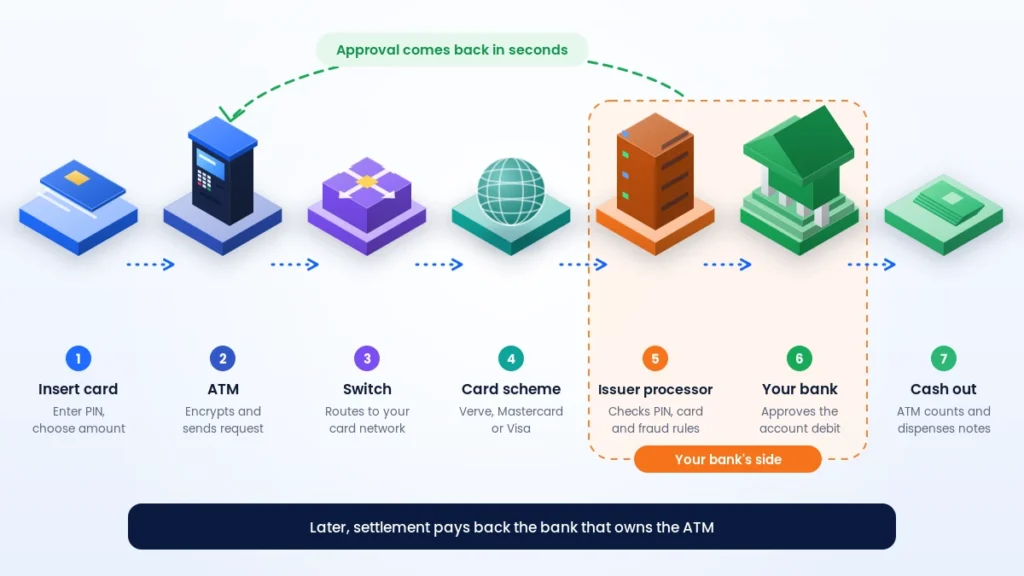
Here is what happens when you withdraw cash:
- You insert your card. First, the card reader reads the chip and asks for your PIN.
- You choose an amount. Next, you enter your PIN and select the amount you want.
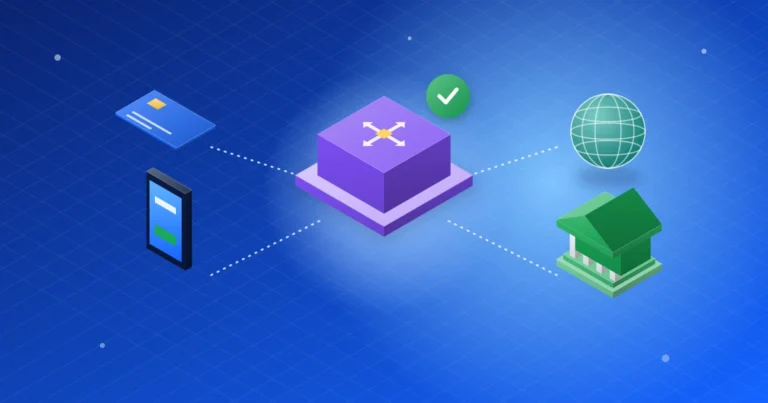
- The ATM sends the request. Then the machine encrypts your PIN and sends an authorisation request to its switch.
- The switch routes it. After that, the switch reads your card number and forwards the request to your card network, such as Verve, Mastercard or Visa.
- The issuer processor checks the card. Next, your bank’s issuer processor validates your PIN, confirms the card is genuine and active, and runs card limits and fraud rules.
- Your bank approves the debit. If those checks pass, the processor asks your bank’s core banking system to confirm your balance and hold the amount. As a result, an approval or decline goes back to the ATM within seconds.
- The ATM dispenses cash. If the request is approved, the ATM counts the notes, releases them, and prints a receipt.
- Settlement follows. Finally, your bank pays the bank that owns the ATM later, through the settlement system.
In short, the ATM itself never holds your account details. Instead, it simply asks your bank for permission and then hands over cash from its own supply.
What does an issuer processor do?
Most banks today do not run card checks inside their core banking system. Instead, they use an issuer processor, which may be the bank’s own card platform or a specialist company working for the bank. It acts as the bank’s proxy and sits between the card network and the bank’s ledger. So, for most ATM transactions, the work is shared like this:
| Issuer processor | Your bank’s core banking system |
|---|---|
| Validates your PIN with secure hardware | Checks that your account has enough money |
| Checks that the card is active, not expired, and not blocked | Places a hold on the amount or debits it |
| Verifies the chip data and applies card limits and fraud rules | Records the transaction in your account |
| Sends the debit request to the bank and replies to the card network | Returns an approval or decline for the debit |
In other words, the bank only needs to answer one question: can this account cover the debit? This split keeps decisions fast. In addition, some issuer processors offer stand-in processing. For example, if the bank’s core system is briefly offline, the processor can approve or decline requests using rules the bank has set, and the bank updates its records later.
On-us vs not-on-us ATM transactions
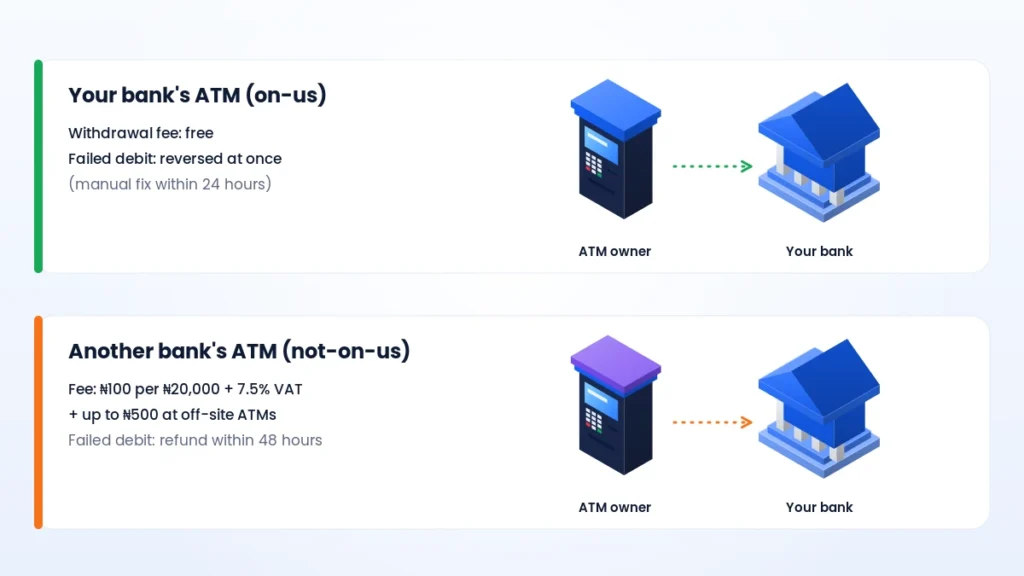
Banks group ATM transactions into two types, and the difference affects both fees and refunds:
- On-us: you use an ATM that belongs to your own bank.
- Not-on-us: you use an ATM that belongs to another bank or operator.
For example, if you bank with Zenith and withdraw from a Zenith ATM, that is on-us. If you use the same card at a GTBank ATM, that is not on-us.
How much do ATM transactions cost in Nigeria?
The CBN revised ATM fees with effect from 1 March 2025, and these charges still apply in August 2026:
| Where you withdraw | Fee |
|---|---|
| Your own bank’s ATM | Free |
| Another bank’s ATM inside a bank branch (on-site) | ₦100 per ₦20,000 withdrawn, plus 7.5% VAT (up to ₦107.50 in total, depending on the bank) |
| Another bank’s ATM off-site (malls, airports, fuel stations) | ₦100 per ₦20,000, plus a surcharge of up to ₦500, which must be shown before you approve. VAT of 7.5% also applies |
| An ATM abroad | The fee set by the foreign bank that owns the ATM |
Note that banks add 7.5% VAT to these fees, so the ₦100 charge can come to ₦107.50. So, a ₦20,000 withdrawal at an off-site ATM of another bank could cost you up to ₦645 with VAT. Therefore, use your own bank’s ATM whenever you can, and always read the fee on the screen before you confirm.
ATM withdrawal limits in 2026
From 1 January 2026, the CBN raised the daily ATM limit to ₦100,000 per customer. In addition, individuals have a weekly cash withdrawal limit of ₦500,000 across all channels, including ATMs, POS agents and bank counters. Withdrawals above the weekly limit attract a 3% fee on the excess for individuals.
Your bank may also set lower limits on your card, for example, for a new account or a basic savings tier.
Why ATM transactions fail
Failed ATM transactions usually have one of these causes:
- Insufficient funds: your balance is lower than the amount plus any fee.
- Limit reached: you have hit your daily or weekly withdrawal limit.
- Wrong PIN: the issuer processor rejects it, and several wrong attempts can block your card.
- Fraud or card rules: the issuer processor declines a request that looks unusual, or a card that is blocked or not enabled for ATM use.
- Network or switch problems: the request times out before your bank replies.
- The ATM is out of cash: it may approve the request but fail to dispense.
- Card problems: the card has expired, is damaged or is blocked.
What if you are debited but get no cash?
This is called a dispense error. Fortunately, the rules are on your side. Under a CBN directive from 2020, your bank must reverse failed on-us withdrawals at once. If the instant reversal fails, it must fix it manually within 24 hours. For non-on-us withdrawals, the refund must happen within 48 hours.
If the money does not return in time, take these steps:
- First, keep the receipt or take a photo of the ATM screen.
- Then note the ATM location, date, time, and amount.
- Next, contact your bank and ask for a dispense error claim.
- Finally, if your bank does not resolve it, escalate the complaint to the Central Bank of Nigeria.
What to do if the ATM keeps your card
ATMs sometimes keep a card after several wrong PINs, a timeout, or a suspected problem. If that happens:
- Call your bank at once and block the card.
- Note the ATM location and the time.
- Ask your bank how to collect the card or get a replacement.
Above all, never accept help from strangers at the ATM. Some fraudsters trap cards on purpose and then offer to “help” you so they can see your PIN.
How to keep your ATM transactions safe
A few habits protect you every time you withdraw cash:
- Cover the keypad with your hand when you type your PIN.
- Check the card slot for loose parts or attachments before you insert your card.
- Use ATMs in well-lit, busy places, ideally inside a bank branch.
- Turn on SMS or app alerts so you see every withdrawal at once.
- Never share your PIN, even with someone who says they work for the bank.
For more tips, read our guide to protecting your POS transactions and our cybersecurity guides.
Frequently asked questions
How long do ATM transactions take?
- Approval usually takes a few seconds. However, settlement between your bank and the ATM owner happens later, often in daily batches.
Can I withdraw money from an ATM without a card?
- Yes, at some banks. Many Nigerian banks offer cardless withdrawals with a code from their app or USSD. Check whether your bank supports it.
Why did I get a debit alert twice for one withdrawal?
- A double debit can happen when a request times out and the system retries it. In that case, report it to your bank with your receipt, because the duplicate should be reversed.
Is it safe to use any bank’s ATM?
- Generally, yes. Your card works on any ATM that accepts your card scheme. Still, check for the off-site surcharge, and avoid machines that look damaged.
What is the maximum I can withdraw from an ATM in one day?
- From January 2026, the CBN limit is ₦100,000 per customer per day. Your bank may set a lower limit on your card.
Key takeaways
- ATM transactions pass from the machine through a switch and your card network to your bank’s issuer processor in seconds.
- The issuer processor checks your PIN, card, and fraud rules, while your bank’s core system approves the debit.
- Your own bank’s ATM is free; another bank’s ATM costs ₦100 per ₦20,000 plus 7.5% VAT (up to ₦107.50), and up to ₦500 more at off-site machines.
- The daily ATM limit is ₦100,000, within a weekly cash limit of ₦500,000.
- Failed withdrawals must be reversed at once on your bank’s ATM, or within 48 hours on another bank’s ATM.
- Cover your PIN, use safe locations, and never accept help from strangers.
Want to compare cards? Read debit card vs prepaid card, or browse more digital payments guides.