A payment gateway is the technology that lets a website or app accept card payments, bank transfers, and other digital payments safely. Think of it as the online version of the POS terminal in a shop. When a customer clicks “Pay”, the gateway collects their details, protects them with encryption, and sends them on for approval. This guide explains how a payment gateway works, what it costs in Nigeria, and how to choose the right one for your business.
Quick answer: A payment gateway is a service that captures a customer’s payment details on a website or app, encrypts them, and sends them to the payment network for approval. It then shows the result on the checkout page. The most popular providers in Nigeria include Paystack, Flutterwave, and Interswitch, among many others.
In this guide
- What is a payment gateway?
- How a payment gateway works
- Payment gateway vs payment processor vs acquirer
- Which payment methods can it accept?
- How much does a payment gateway cost in Nigeria?
- How to choose a payment gateway for your business
- Is a payment gateway safe?
- Frequently asked questions
- Key takeaways
What is a payment gateway?
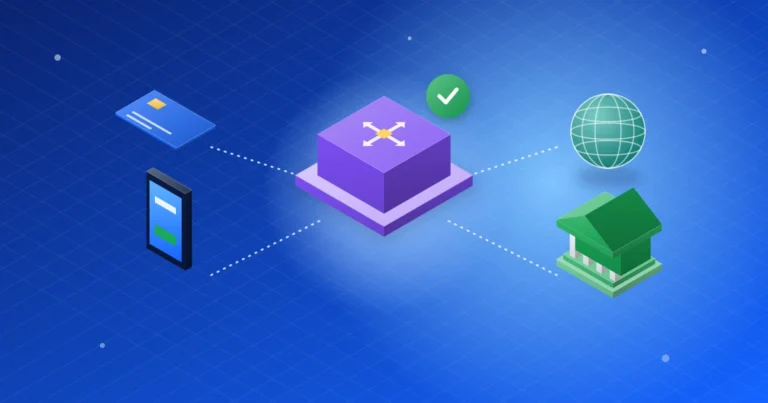
In a physical shop, a POS terminal reads your card. Online, however, there is no terminal, so a gateway does that job instead. In other words, it sits between the checkout page and the banks.
A good gateway does three things:
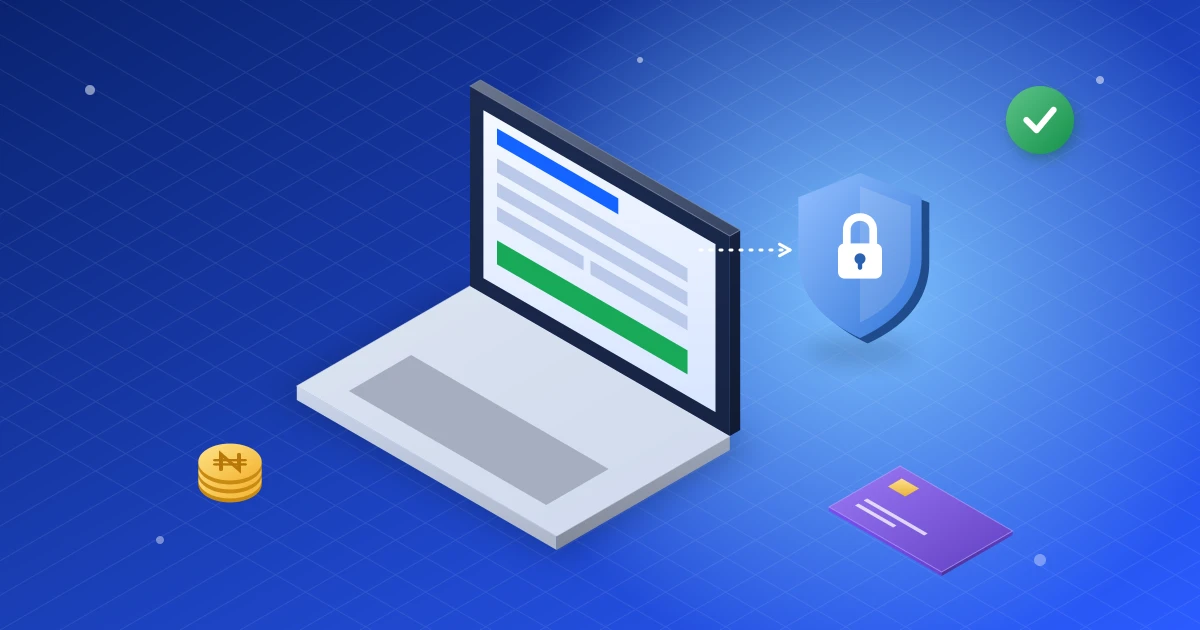
- Collects payment details through a secure checkout form or popup.
- Protects those details with encryption and tokenisation, so the merchant never stores raw card numbers.
- Connects the request to processors, card schemes and banks, and then returns the result.
For example, when you buy airtime in an app or pay school fees online, a gateway usually handles the payment behind the scenes. You may not notice it, but it decides how smooth and safe that payment feels.
How a payment gateway works
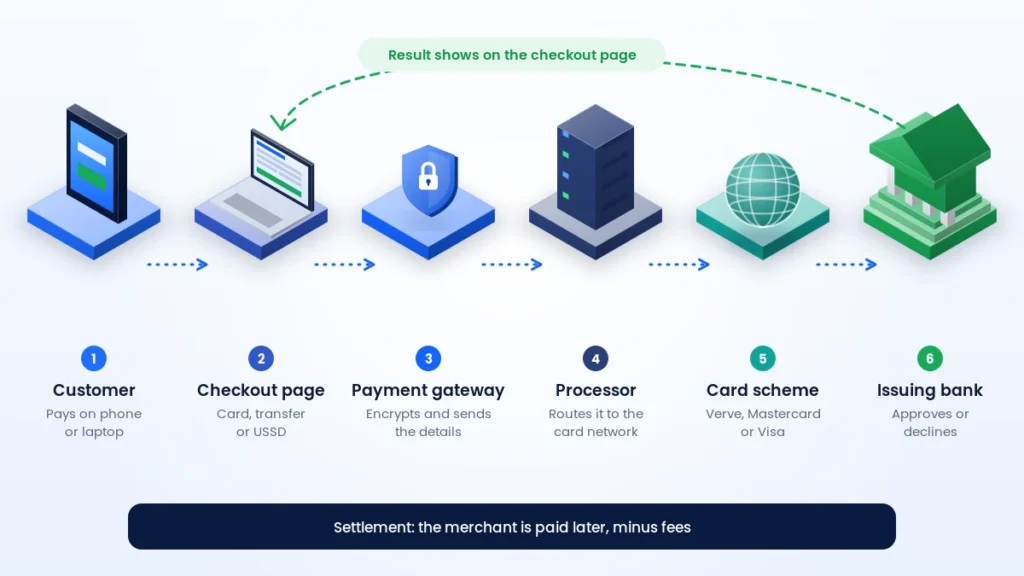
Here is the journey of a typical online card payment:
- The customer checks out. They choose a product and click “Pay” on the website or app.
- Next, the gateway collects the details. A secure form asks for the card number, expiry date, and CVV. It may also offer bank transfer or USSD.
- Then it encrypts and sends them. After protecting the data, it forwards an authorisation request to the processor.
- After that, the processor routes it. It sends the request through the right card scheme, such as Verve, Mastercard, or Visa.
- Your bank checks that it is really you. In Nigeria, the issuing bank usually asks for an OTP or an app confirmation. This extra step uses a standard called 3-D Secure.
- Then the bank decides. It checks the balance and fraud signals, and then approves or declines.
- Finally, the result appears. The gateway shows “Payment successful” or an error message, and it notifies the merchant.
- Settlement follows. Later, the merchant receives the money in their bank account, minus fees.
Of course, card payments are only one route. For a bank transfer, the gateway often creates a temporary account number for the customer. It then confirms the payment as soon as the transfer arrives.
Payment gateway vs payment processor vs acquirer
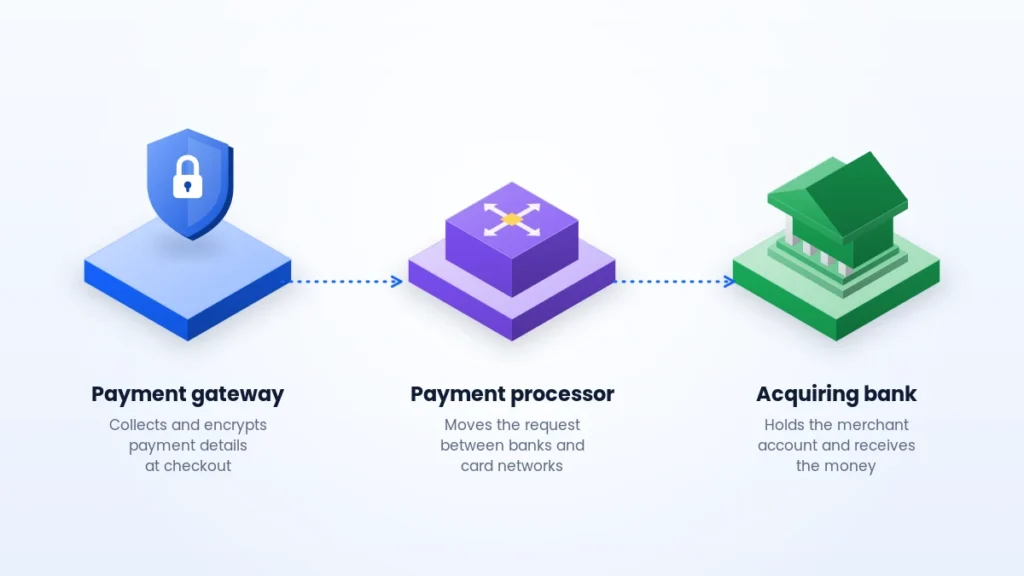
These three terms often appear together. However, each one plays a different role.
| Role | Main job | Who sees it | Simple analogy |
|---|---|---|---|
| Payment gateway | Captures and encrypts payment details | The customer, at checkout | The shop’s card machine |
| Payment processor | Moves the request between banks and card networks | Mostly invisible | The road the request travels on |
| Acquiring bank | Holds the merchant’s account and receives the money | The merchant | The merchant’s bank account |
In practice, many modern providers combine these roles. For instance, a Nigerian fintech may run the gateway, process the payment, and pay you through a partner bank. So, you often sign one agreement and get all three services.
Which payment methods can it accept?
In general, most Nigerian customers expect more than cards. A strong provider in Nigeria usually supports:
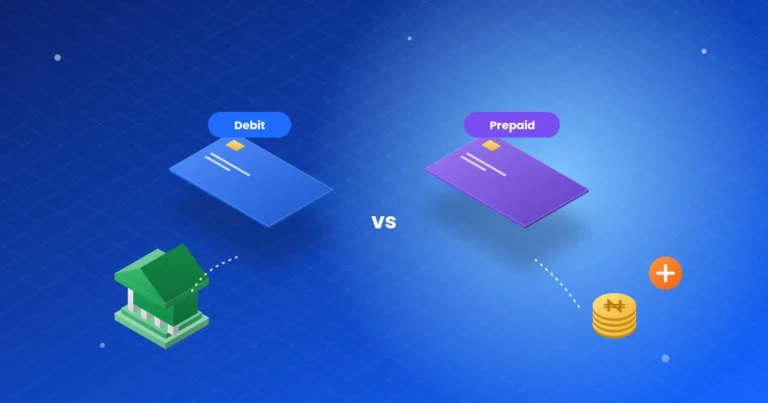
- Debit, Prepaid and Credit cards: Verve, Mastercard, and Visa.
- Bank transfers: often through dedicated or temporary virtual accounts.
- USSD: for customers who prefer to pay with a short code.
- Mobile money and wallets: where the provider supports them.
- International cards: useful if you sell to customers abroad.
Offering several options can reduce abandoned checkouts, because customers can pay the way they trust most.
How much does a payment gateway cost in Nigeria?
Most providers charge a percentage of each successful transaction, sometimes plus a flat fee. In addition, small businesses usually pay no monthly fee.
As an example, Paystack publishes these Nigerian transaction prices (checked in October 2026):
| Transaction type | Fee |
|---|---|
| Local payments | 1.5% + ₦100, capped at ₦2,000 |
| Local payments under ₦2,500 | 1.5% (no ₦100 flat fee) |
| International cards | 3.9% + ₦100 |
| Dedicated virtual accounts | 1%, capped at ₦300 |
So, on a ₦10,000 local sale, the fee is 1.5% of ₦10,000 (₦150) plus ₦100. In total, that makes ₦250, so you receive ₦9,750. Prices change, and every provider publishes its own rates. Therefore, compare the current pricing pages before you decide.
How to choose a payment gateway for your business
First of all, use this checklist when you compare providers:
- Licensing: first, confirm that the provider holds the right CBN licence or works with a licensed partner.
- Security: look for PCI DSS compliance and 3-D Secure support.
- Fees: compare local and international rates, caps, and any setup costs.
- Settlement speed: ask how quickly the money reaches your bank account.
- Payment methods: check for cards, transfers, USSD, and any others your customers use.
- Integrations: make sure it works with your platform, such as WordPress and WooCommerce, or offers clear developer guides.
- Support and disputes: test their support, and read how they handle chargebacks and refunds.
If you are just starting, pick the provider your customers already recognise. After all, a familiar checkout page builds trust and often improves sales.
Is a payment gateway safe?
A reputable gateway is one of the safest ways to accept money online. In particular, several layers protect each payment:
- Encryption (HTTPS/TLS) protects the data while it travels.
- Tokenisation replaces card numbers with tokens, so your website never keeps the real numbers.
- PCI DSS is the global security standard for card data. The PCI Security Standards Council maintains it.
- 3-D Secure and OTPs confirm that the real cardholder is paying. EMVCo manages the 3-D Secure standard.
- Fraud checks flag unusual activity before the bank approves a payment.
However, safety also depends on you. Use a strong password and two-factor authentication on your dashboard, and never share your secret API keys. Our cybersecurity guides explain how to lock down your business accounts.
Frequently asked questions
Do I need a website to use a payment gateway?
Not always. Instead, many providers offer payment links, invoices, and simple storefront pages. So, you can collect payments through social media or WhatsApp.
What is the difference between a payment gateway and a POS terminal?
Both capture payment details. However, a POS terminal works in a physical shop, while a payment gateway works on websites and apps. Learn more in our guide on how POS transactions work in Nigeria.
How long does settlement take?
It depends on the provider and your account type. Many Nigerian providers settle local payments on the next business day, and some offer faster options for a fee.
Can a payment gateway accept international payments?
Yes, if the provider supports it. Still, international cards usually cost more, and some providers ask for extra business verification first.
Can I pass the fees on to my customers?
Some providers let you add the fee to the customer’s total. If yours does, check the settings first, and show the fee clearly at checkout.
Key takeaways
- A payment gateway is the online version of a POS terminal.
- It collects, encrypts, and sends payment details, and then shows the result.
- Gateways, processors and acquirers do different jobs, but one provider often bundles all three.
- In Nigeria, look for cards, transfers and USSD, plus clear fees and fast settlement.
- Compare current pricing pages before you choose, because fees change.
Want more? Browse our digital payments guides for clear explanations of cards, transfers, and fintech.