Many shoppers want an expensive phone, laptop, or fridge today but would rather pay over a few weeks or months. Buy now, pay later lets them do that, and it is spreading across online shops in Nigeria and worldwide. For a business, it can mean more sales and bigger orders. However, it also brings fees, new rules, and risks for your customers. This guide explains how buy now, pay later works for merchants, what it costs, and how to decide whether your business should offer it.
Quick answer: Buy now, pay later (BNPL) lets customers split a purchase into instalments while the merchant usually gets paid upfront by a BNPL provider, minus a fee. It can increase sales and order sizes, especially for higher-priced goods. However, you pay a fee on each sale and depend on a partner who must follow consumer lending rules. In Nigeria, BNPL providers must register with the FCCPC.
In this guide
- What is buy now, pay later?
- How buy now, pay later works for merchants
- What buy now, pay later costs your business
- BNPL vs other ways to pay in instalments
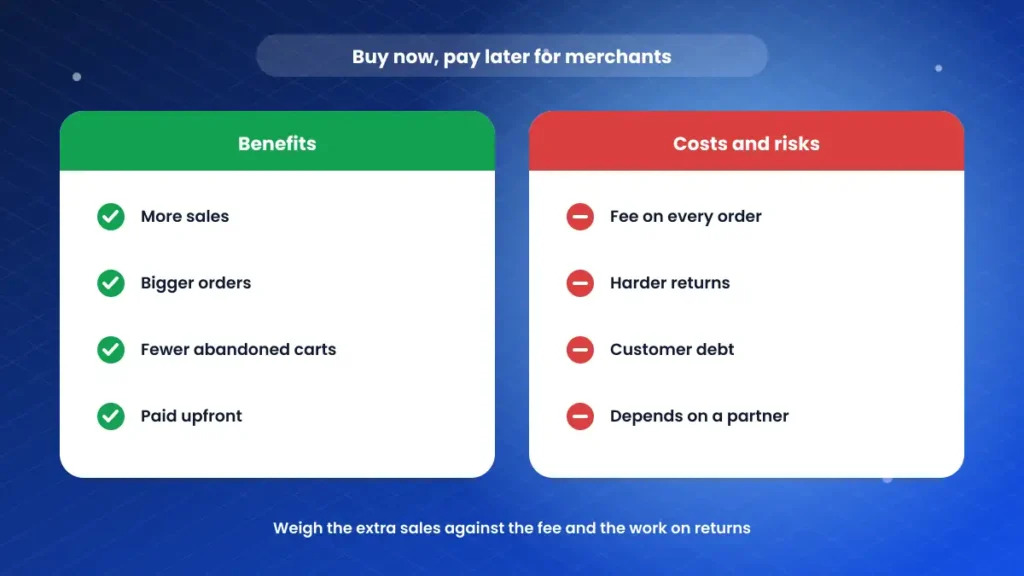
- Benefits of offering buy now, pay later
- Costs and risks for merchants
- Buy now, pay later in Nigeria
- Should your business offer buy now, pay later?
- How to add buy now, pay later to your shop
- Frequently asked questions
- Key takeaways on buy now, pay later
What is buy now, pay later?
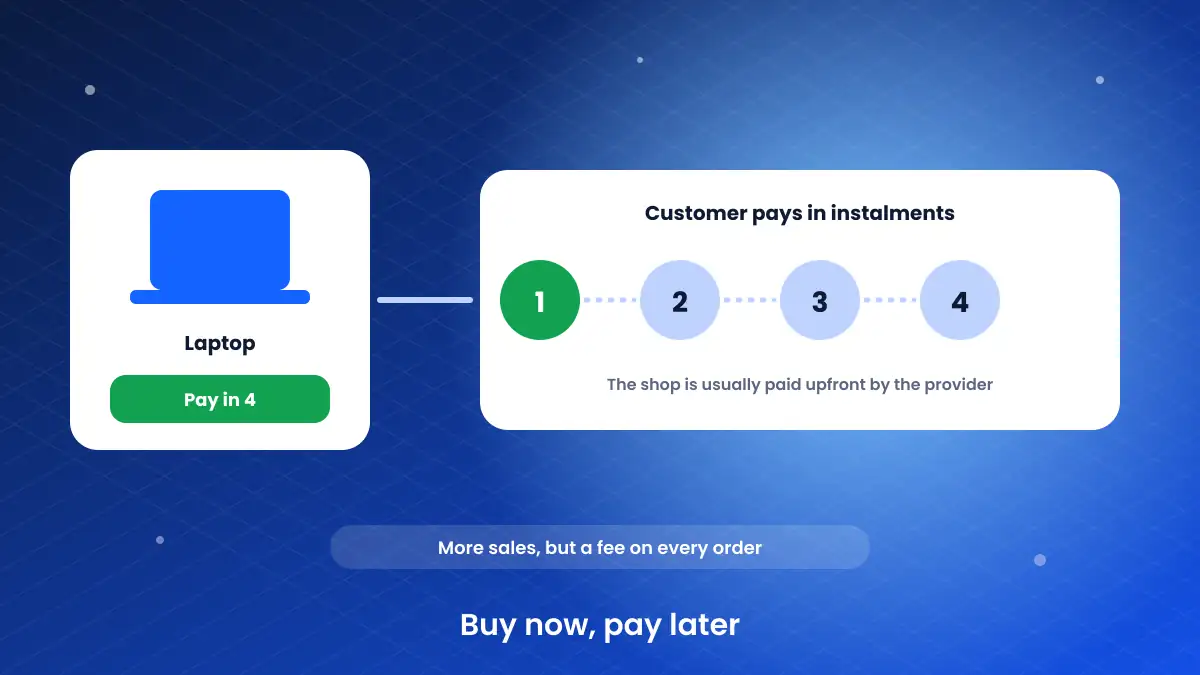
Buy now, pay later is a short-term loan offered at checkout. The customer takes the item now and pays for it in instalments, often over a few weeks or months. Some plans charge no interest if the customer pays on time, while others add interest or fees.
For merchants, the key point is who carries the risk. In most cases, a separate BNPL provider pays you for the sale and then collects the instalments from the customer. So, if the customer misses a payment, the provider usually takes the loss, not you.
BNPL is a type of embedded finance because a lending service sits inside your shop’s checkout.
How buy now, pay later works for merchants
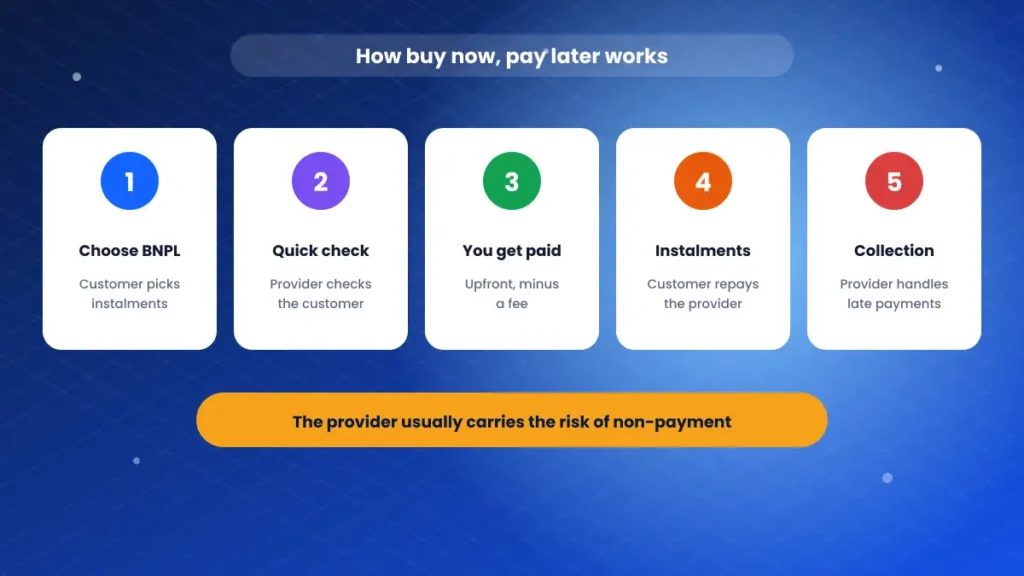
A typical BNPL sale follows five steps:
- The customer chooses BNPL. First, at checkout, the customer picks the instalment option instead of paying in full.
- The provider checks the customer. Next, the BNPL provider checks the customer’s identity and ability to repay, often in seconds.
- You get paid. Then, if the provider approves the customer, it pays you the order value, minus its fee.
- The customer pays in instalments. After that, the customer repays the provider on the agreed schedule.
- The provider collects. Finally, the provider handles reminders, late payments, and collections.
Our guide on how to accept online payments explains the checkout options BNPL sits beside.
What buy now, pay later costs your business
BNPL is not free for merchants. Instead, the provider usually charges a fee on each sale, often higher than a normal card fee. Fees vary by provider, country, and plan length. Moreover, they change over time, and regulators can change the rules on charges, so always ask for the current rate in writing.
You may also face other costs:
- Setup or monthly fees. Some providers charge to join.
- Refund handling. Returns must be processed through the provider, which can take longer.
- Integration work. Adding a new option to your checkout may need a developer.
BNPL vs other ways to pay in instalments
Many Nigerian shops already sell on instalments. Here is how BNPL compares:
| Feature | BNPL provider | Your own instalment plan | Layaway |
|---|---|---|---|
| When the customer gets the item | Now | Now | After the last payment |
| When you get paid | Upfront, minus a fee | Over time | Over time |
| Who carries the risk of non-payment | Usually the provider | You | Low, because you keep the item |
| Lending rules | The provider must comply | You may need to comply | Usually none |
In short, BNPL moves the credit risk away from you, but you pay for that through the fee.
Benefits of offering buy now, pay later
The main benefit is more sales. For example, Stripe tested BNPL across more than 150,000 checkout sessions and found up to a 14% increase in revenue where BNPL was available, in its June 2024 study. Stripe also said more than two-thirds of BNPL sales were new sales rather than customers switching from cards.
Other benefits include:
- Bigger orders. Customers often buy more when they can spread the cost.
- Fewer abandoned carts. A lower first payment can help hesitant buyers finish checkout.
- New customers. Some shoppers look for shops that offer instalments.
- Fast payment. You usually receive the money upfront, which helps cash flow.
However, results vary by business. Stripe’s test covered its own merchants worldwide, not Nigeria specifically, so treat these figures as a guide rather than a promise.
Costs and risks for merchants
Before you add BNPL, weigh these risks:
- Higher fees. The fee per sale can cut into your profit, especially on low-margin goods.
- Returns and disputes. Refunds take more steps because the provider must cancel or adjust the loan. In the US, 13.7% of BNPL loans in 2021 involved a returned or disputed purchase, the Consumer Financial Protection Bureau found.
- Customer debt. Some customers borrow more than they can repay. The same report found that 10.5% of US BNPL users paid at least one late fee in 2021.
- Your reputation. If a provider chases your customers aggressively, they may blame your shop.
- Partner risk. You depend on the provider’s approval rates, uptime, and compliance.
Buy now, pay later in Nigeria
BNPL is growing in Nigeria, mostly for phones, electronics, and household goods. For instance, Jumia Nigeria added BNPL partnerships with Easybuy and CredPal in May 2024, according to Jumia’s announcement.
Rules have also tightened. The Federal Competition and Consumer Protection Commission (FCCPC) issued its Digital, Electronic, Online, or Non-Traditional Consumer Lending Regulations in July 2025, effective from September 2025. They cover e-commerce companies that provide BNPL financing, according to a Mondaq summary. The rules require registration, clear loan terms, data protection, and fair debt recovery, with heavy fines for breaches.
So, if you plan to offer credit yourself rather than through a partner, take legal advice first. If you use a partner, check that it is registered with the FCCPC.
Should your business offer buy now, pay later?
BNPL suits some businesses better than others. It may be worth offering if:
- you sell higher-priced items, such as phones, electronics, furniture, or courses;
- many customers ask to pay in instalments;
- customers often abandon carts at checkout; and
- your profit margin can absorb an extra fee.
By contrast, it may not suit you if you sell low-priced goods with thin margins, or if most customers already pay easily by transfer.
How to add buy now, pay later to your shop
If you decide to try it, follow these steps:
- Check your numbers. First, work out your margin on the products you would offer on BNPL.
- Compare providers. Next, compare fees, approval rates, settlement times, and how they handle refunds.
- Confirm registration. Then, check that the provider is registered with the FCCPC.
- Read the merchant agreement. After that, check who pays if a customer defaults or disputes a sale.
- Start small. Finally, offer BNPL on a few products, then compare sales and returns after a month.
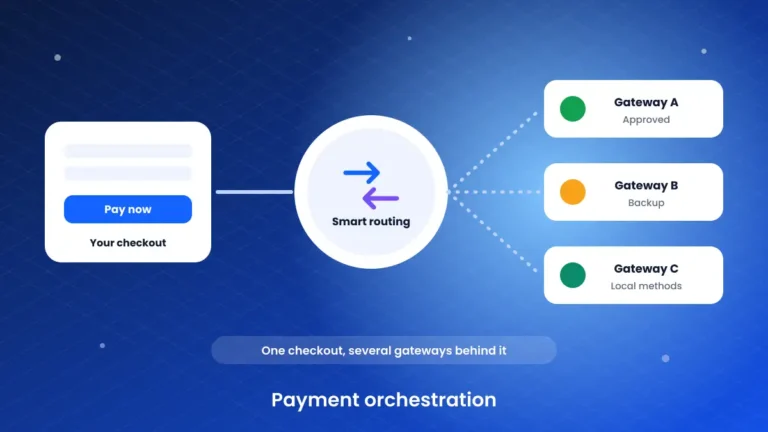
Also, if you add BNPL alongside other gateways, our guide to payment orchestration explains how to manage several providers.
Frequently asked questions
Who pays for buy now, pay later?
Usually the merchant pays a fee on each sale. Some customers also pay interest or fees, depending on the plan.
Do I get paid if the customer does not repay?
With most BNPL providers, yes. The provider pays you upfront and takes the risk of non-payment. Still, check your agreement, because some plans differ.
Is buy now, pay later the same as a credit card?
Not quite. Both let customers borrow, but BNPL is tied to a single purchase with a fixed schedule. Our guide comparing debit, credit, and prepaid cards explains how credit cards work.
Is BNPL regulated in Nigeria?
Yes. The FCCPC’s 2025 digital lending regulations cover BNPL providers, which must register and follow consumer protection rules.
Can a small business offer BNPL?
Yes, through a partner provider. However, it makes most sense for shops selling higher-priced goods.
Key takeaways on buy now, pay later
- Buy now, pay later lets customers pay in instalments while you are usually paid upfront by a provider.
- It can increase sales and order sizes, especially for higher-priced items.
- You pay a fee on each sale, and returns take more work.
- In Nigeria, BNPL providers must register with the FCCPC under its 2025 lending rules.
- Start with a few products, track the results, and check your margin before you expand.
Want to grow your online sales? Read our guides on how to start an online store and what a payment gateway is, or browse all our digital business guides.