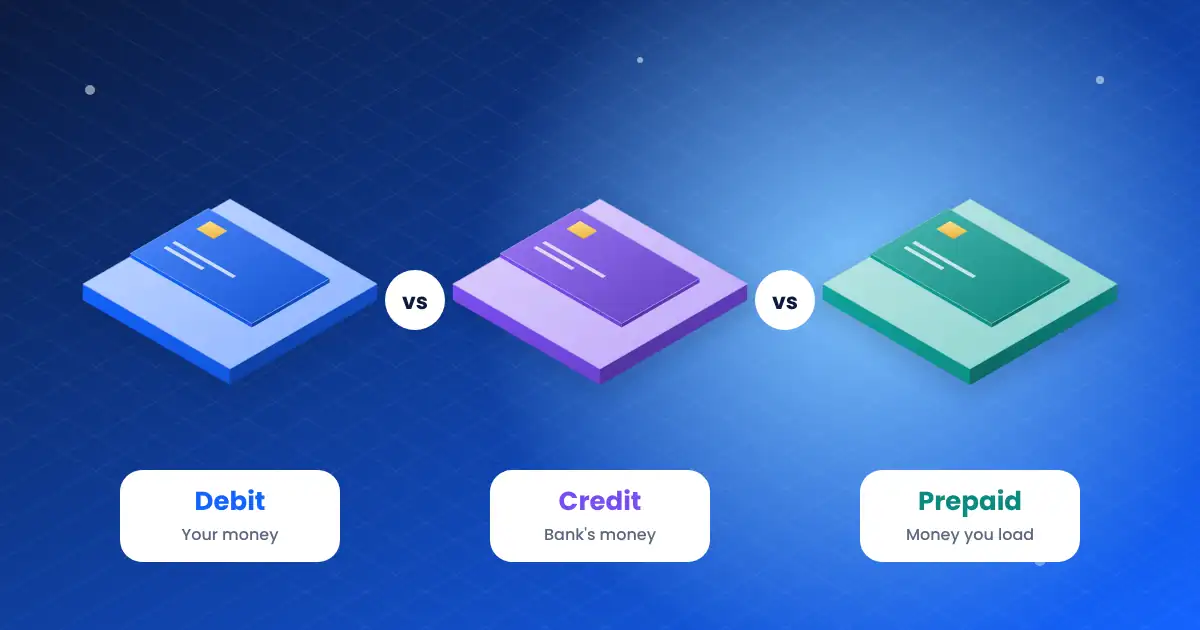
Debit, credit, and prepaid cards look almost the same. They carry the same Verve, Mastercard, or Visa logo, and they work at the same POS terminals and checkout pages. Many of them also support contactless payment, so you can tap instead of inserting the card. The big difference is whose money you spend. This guide compares debit vs credit vs prepaid cards side by side, shows what a credit card really costs, and helps you choose the right one for each job.
Quick answer: In the debit vs credit vs prepaid card comparison, a debit card spends money already in your bank account, a credit card spends the bank’s money that you repay later, and a prepaid card spends only what you load onto it. Use a debit card for everyday spending, a prepaid card to limit risk online or abroad, and a credit card only if you can repay the full balance each month, because interest in Nigeria can run to about 2.5% a month.
In this guide
- Debit vs credit vs prepaid card: the short answer
- How debit, credit and prepaid cards work
- What a credit card really costs: a ₦100,000 example
- Debit, credit or prepaid card: which is safest online?
- Credit cards and your credit history
- Debit vs credit vs prepaid card: which should you use?
- How to get a debit, credit or prepaid card in Nigeria
- Frequently asked questions
- Key takeaways
Debit vs credit vs prepaid card: the short answer
All three cards look and feel the same at the till. However, each one draws on a different pot of money, and that changes your costs, your risks and your protection.
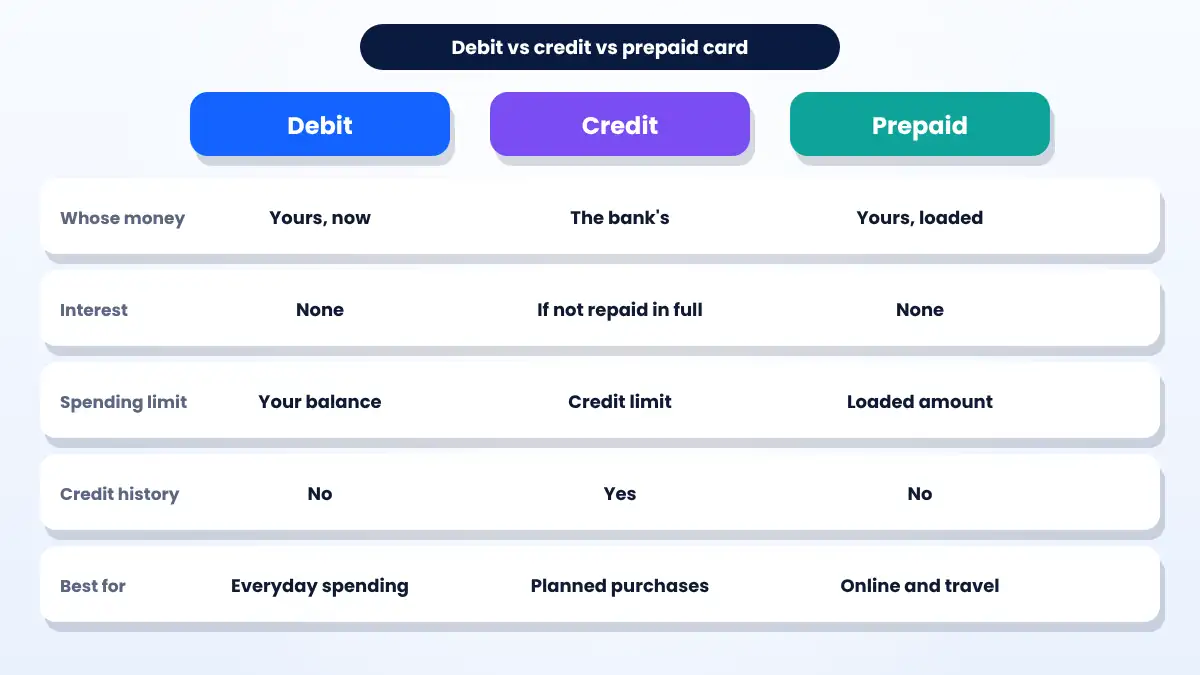
| Debit card | Credit card | Prepaid card | |
|---|---|---|---|
| Whose money | Yours, from your bank account | The bank’s, which you repay later | Yours, loaded onto the card in advance |
| Spending limit | Your balance and daily limits | The credit limit the bank sets | Whatever you have loaded |
| Interest | None | Yes, if you do not repay in full | None |
| Bank account needed | Yes | Usually, plus proof of income | Not always |
| Builds credit history | No | Yes | No |
| Risk if the card is stolen | Your account balance | The bank’s money, while you dispute it | Only the loaded amount |
| Best for | Everyday spending and cash | Planned purchases you can repay | Online shopping, travel, budgets |
In short, debit and prepaid cards spend your own money, while a credit card is a short-term loan.
How debit, credit and prepaid cards work
Debit card: your money, right now
A debit card is linked to your current or savings account. When you pay, the card issuer checks your balance and debits the amount at once. In Nigeria, most people get a debit card when they open a bank account, and it is the card behind most POS and ATM transactions.
Credit card: the bank’s money, repaid later
A credit card gives you a spending limit that the bank sets after checking your income and history. Each month you get a statement. If you repay the full balance by the due date, you usually pay no interest. However, if you pay only part of it, the bank charges interest on what is left.
Prepaid card: money you load first
A prepaid card holds only the money you load onto it, from your bank account or in cash. Once the balance runs out, the card stops working. Many virtual dollar cards in Nigerian fintech apps work this way. Our guide to debit card vs prepaid card covers prepaid cards in more depth.
What a credit card really costs: a ₦100,000 example
Credit cards are cheap if you repay in full and expensive if you do not. Here is an illustration based on one bank’s published terms. For example, Stanbic IBTC lists its Visa Platinum naira credit card at 2.5% interest per month, with up to 55 interest-free days on purchases and a yearly management fee of 1% of the credit limit.
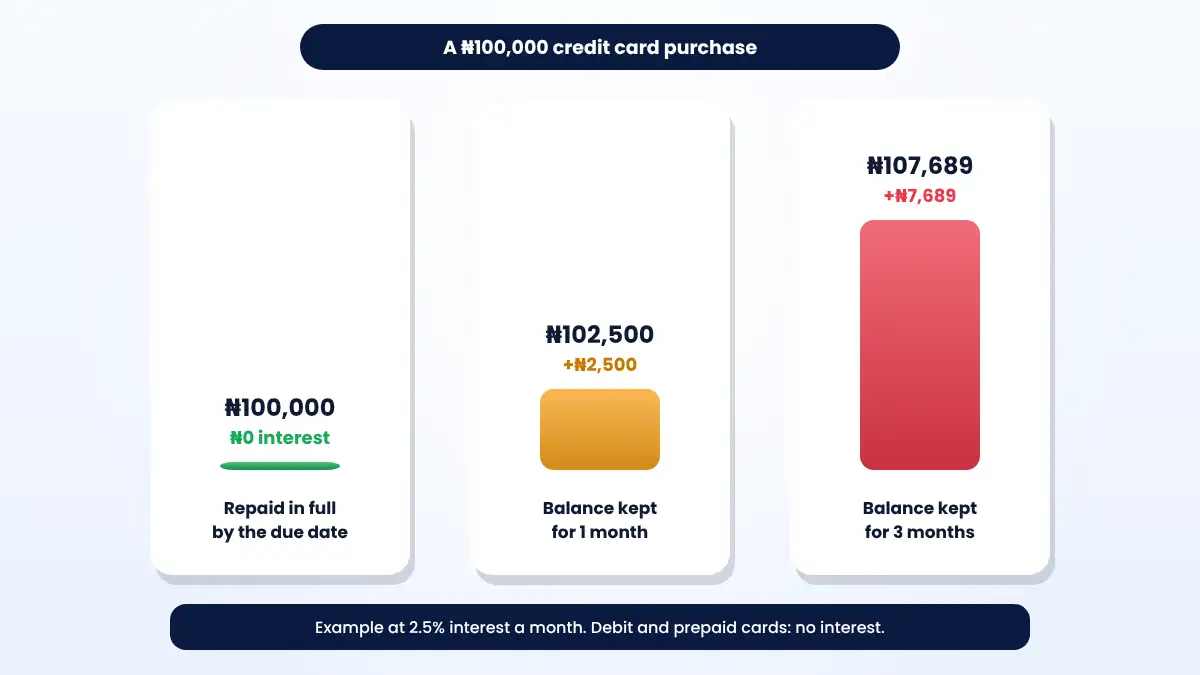
Say Ada buys a laptop for ₦100,000 with that card:
| What Ada does | Interest she pays |
|---|---|
| Repays ₦100,000 in full by the due date | ₦0 |
| Leaves the balance for one month | ₦2,500 |
| Leaves the balance for three months | About ₦7,689, so she owes about ₦107,689 |
| Leaves it for a full year | About 34% of the balance |
On top of the interest, a ₦500,000 credit limit would attract a ₦5,000 management fee at that bank, plus 7.5% VAT, since bank fees in Nigeria usually attract VAT. Rates and fees differ from bank to bank, so always read the key facts statement before you apply.
By contrast, a debit or prepaid card would simply take the ₦100,000 from Ada’s own money, with no interest at all.
Debit, credit or prepaid card: which is safest online?
Each card puts a different amount of money at risk if someone steals your card details:
- Debit card: the thief can reach your whole account balance, up to your card limits. You get the money back only after the bank investigates.
- Credit card: the thief spends the bank’s money, not yours. While you dispute the charge, your own savings stay untouched.
- Prepaid card: the thief can take only what is loaded. So, many people keep a small balance on a prepaid card for online shopping and subscriptions.
Whichever card you use, turn on transaction alerts, set daily limits in your banking app, and never share your PIN or OTP. Our guide on how to protect your bank account explains the other settings that matter.
For travel, check whether your card works abroad before you leave. Prepaid dollar cards and credit cards are often easier to use for foreign payments than naira debit cards, which can have tight international limits.
Credit cards and your credit history
Only one of the three cards builds a credit history. When you use a credit card and repay on time, your bank reports it to licensed credit bureaus, such as CRC Credit Bureau. Lenders then use that record when you apply for a loan, a car, or a mortgage.
On the other hand, late or missed payments also go on your record, and they can make future loans harder or more expensive to get. Debit and prepaid cards do not affect your credit history either way, because you never borrow.
Debit vs credit vs prepaid card: which should you use?
Most people need more than one card. Here is a simple way to choose:
| Your situation | Best card |
|---|---|
| Everyday shopping, POS payments and cash | Debit card |
| Online shopping on websites you do not know well | Prepaid card with a small balance |
| Netflix, Spotify or other foreign subscriptions | Prepaid dollar card |
| A planned large purchase you can repay within a month | Credit card |
| Building a credit history for a future loan | Credit card, repaid in full every month |
| Teaching a teenager to manage money | Prepaid card |
| You often run out of money before payday | Debit card, not credit |
In practice, a debit card for daily spending plus a prepaid card for online payments covers most needs. Add a credit card only if you have a steady income and the discipline to repay the full balance every month.
How to get a debit, credit, or prepaid card in Nigeria
Getting a debit card is simple. Your bank issues one when you open an account, usually for a small issuance fee. A prepaid card is also easy to get from a bank or fintech app, and some only need your BVN or NIN.
A credit card takes more work. Banks usually ask for:
- An account with the bank, often a salary account for a few months.
- Proof of income, such as payslips or a letter from your employer.
- Valid ID and proof of address.
- A good credit record, which the bank checks with a credit bureau.
Your credit limit then depends on your income and your existing debts. So, compare the interest rate, interest-free days, fees, and minimum repayment of a few banks before you apply.
Frequently asked questions
Are credit cards common in Nigeria?
Not very. Most Nigerians use debit cards, and banks mainly offer credit cards to salaried customers with a steady income. However, more banks and fintechs are now launching credit products.
Which is better, a debit card or a credit card?
A debit card is better for everyday spending because you cannot overspend or pay interest. A credit card is better for planned purchases you can repay in full, and for building a credit history.
Is a virtual dollar card a prepaid card?
Usually, yes. Most virtual dollar cards in Nigerian apps are prepaid: you fund them in naira or dollars, and you can spend only what you load. Our guide to using a virtual dollar card explains how to pay subscriptions with one safely.
What happens if I miss a credit card payment?
The bank charges interest on the unpaid balance and may add a late fee. It can also report the missed payment to a credit bureau, which hurts your credit history.
Can I withdraw cash with a credit card?
Often you can, but it is usually expensive. Banks tend to charge a cash advance fee and start interest at once, with no interest-free period. Use your debit card for cash instead, and see our POS vs ATM guide for the cheapest way to get it.
Key takeaways
- In debit vs credit vs prepaid card, the difference is whose money you spend: yours, the bank’s, or what you loaded.
- A debit card suits everyday spending and cash, with no interest.
- A credit card is a short-term loan; it is free only if you repay in full by the due date.
- Credit card interest in Nigeria can be about 2.5% a month, roughly 34% a year if you never repay.
- A prepaid card limits your risk online and abroad, because only the loaded amount is exposed.
- Only a credit card builds a credit history, and only when you repay on time.