Many Nigerian businesses now open on Instagram and close deals on WhatsApp. You post a photo, a customer sends a DM, and you close the sale in the chat. This is social commerce, and it lets you start selling with just a phone. However, it also brings risks, from fake payment alerts to unhappy buyers. This guide shows how to set up, sell, get paid, and deliver safely, so your social commerce business builds trust instead of complaints.
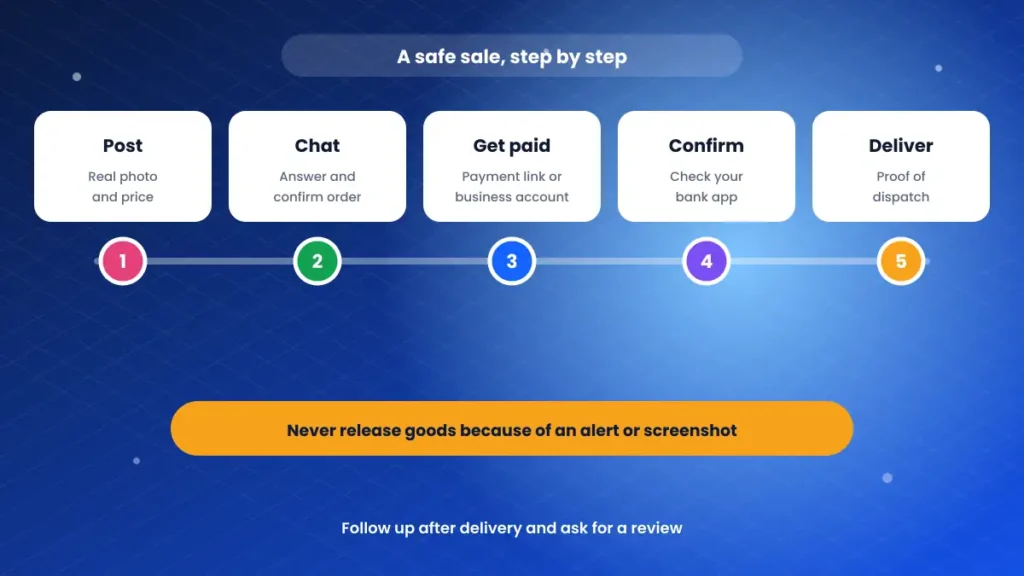
Quick answer: Social commerce means selling products directly through social media apps such as Instagram, WhatsApp, TikTok, and Facebook. To do it safely, use a business account, show clear prices and policies, take payment through a payment link or verified transfer, confirm every payment in your bank app, and send customers proof of dispatch. Never release goods because of an SMS alert or a screenshot.
In this guide
- What is social commerce?
- Why trust is the biggest social commerce challenge
- Step 1: Set up your social commerce accounts
- Step 2: Build a catalogue buyers can trust
- Step 3: Get paid safely
- Step 4: Deliver and follow up
- Your obligations to customers
- Social commerce safety tips for sellers
- Social commerce safety tips for buyers
- Frequently asked questions
- Key takeaways on social commerce
What is social commerce?
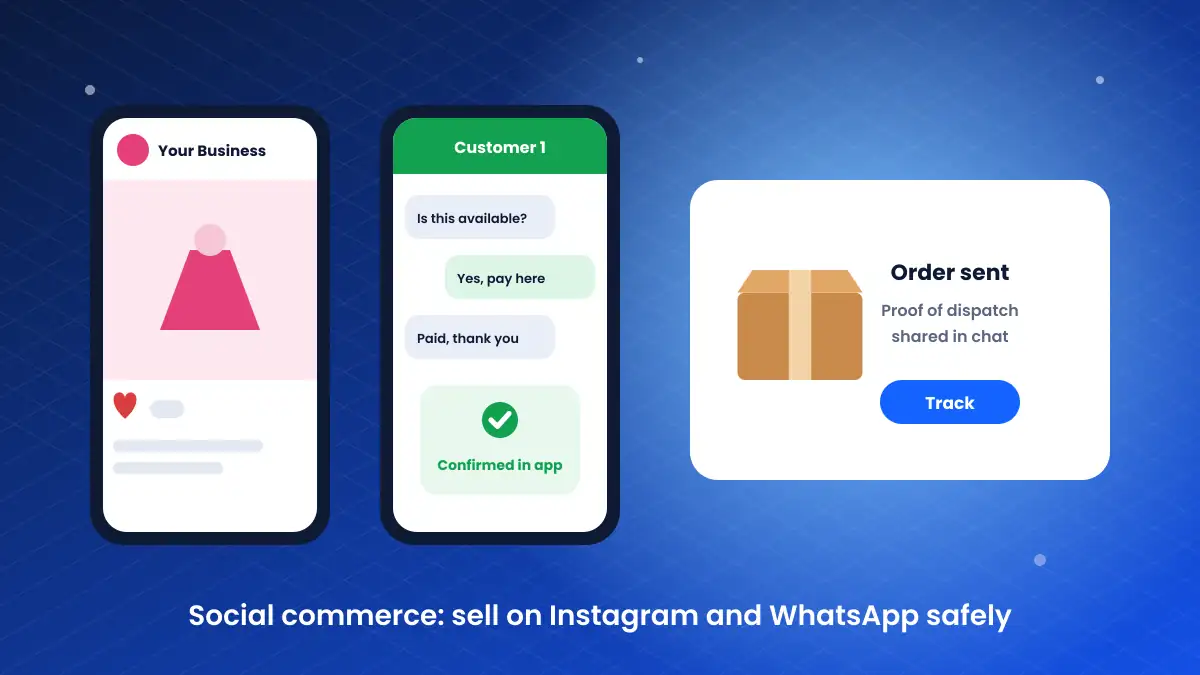
Social commerce is selling through social media, from the first post to the final payment. For example, a customer might discover your product in an Instagram Reel, ask questions in WhatsApp, pay through a link, and track delivery in the same chat.
This differs from a traditional online store. Instead of sending buyers to a website, you meet them where they already spend time. As a result, it suits small businesses that cannot afford shop rent or a full website.
Moreover, the scale is large. In May 2026, research by Public First for Meta found that 81% of online businesses surveyed said Facebook, Instagram, and WhatsApp had expanded their customer base beyond their local area, BrandSpur reported. The same research estimated that 14 million Nigerian small businesses used Meta’s apps in 2025.
Why trust is the biggest social commerce challenge
Selling through chats is easy. Buyers, however, are cautious. A January 2026 Nairametrics opinion piece described common problems in Nigeria’s social media economy: items arrive late, arrive wrong, or never arrive, and some sellers stop replying. It also noted that there are no shared rules on refunds or delivery.
So the sellers who win are the ones who make buyers feel safe. In other words, clear prices, honest photos, fast replies, and visible policies are not extras. They are your competitive advantage.
Step 1: Set up your social commerce accounts
First, start with the right tools on each app:
- WhatsApp Business. Use the free WhatsApp Business app, not your personal WhatsApp. It gives you a business profile, a catalogue, quick replies, and labels. Our guide to WhatsApp Business vs. regular WhatsApp explains the differences.
- Instagram professional account. On your profile, tap the menu, then Account type and tools, then Switch to Professional Account, and choose Business, according to a 2026 setup guide. This adds insights and contact buttons.
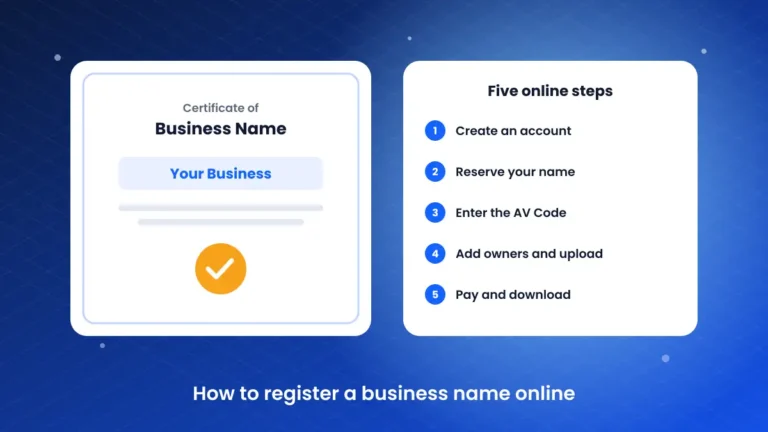
- A consistent name. Use the same business name, logo, and profile photo everywhere, so customers can recognise you. If you plan to grow, you can register a business name with CAC.
Also, secure every account with two-step verification. A hacked page can scam your customers in your name, so follow our steps to secure your WhatsApp account.
Step 2: Build a catalogue buyers can trust
After all, your catalogue is your shop window. So make it clear and honest:
- Use real photos. Take your own photos in good light, and show the actual item, including its size and colour.
- Show prices. Many buyers skip sellers who reply “DM for price”. Instead, add prices to your catalogue and posts.
- Write useful descriptions. For example, include size, material, quantity, and what is in the box.
- Show delivery options. List delivery areas, timelines, and costs before the customer pays.
- Pin your policies. Add a short note on returns, exchanges, and refunds to your WhatsApp profile and Instagram highlights.
If you want a full shop page later, see how to start an online store.
Step 3: Get paid safely
Payment is where most social commerce scams happen, on both sides. Therefore, choose methods that protect you and the customer:
| Payment method | How it works | Risk for you |
|---|---|---|
| Payment link | The customer pays on a secure checkout page | Low, because the provider confirms the payment |
| Bank transfer to a business account | The customer sends money to your account | Medium, because fake alerts and screenshots are common |
| Pay on delivery | The customer pays when the item arrives | Higher, because of failed deliveries and returns |
A payment link is often the safest option, because the provider confirms each payment in your dashboard. For a wider comparison, see how to accept online payments.
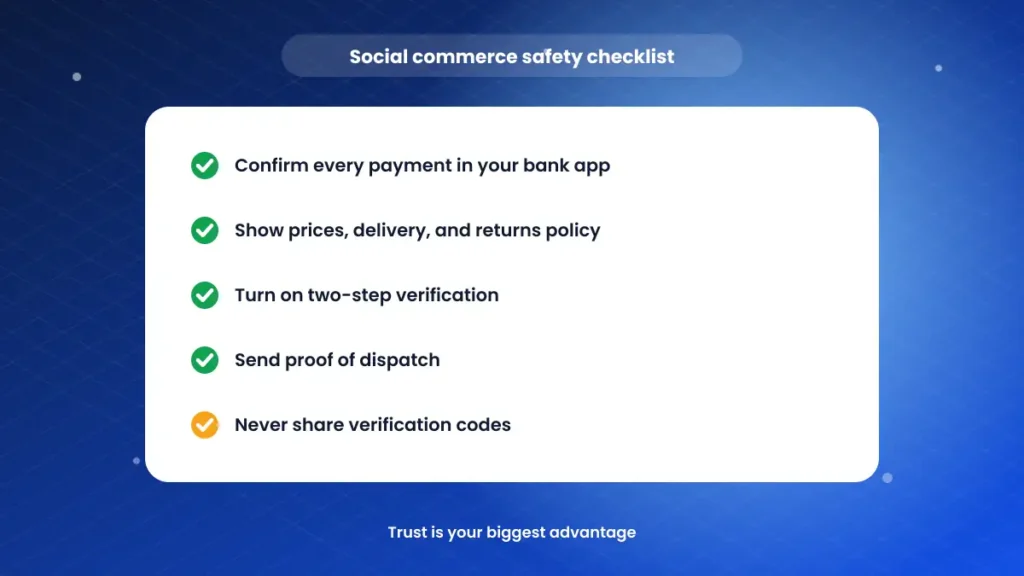
Whatever method you use, follow one rule: confirm the money in your own bank app or dashboard before you release goods. An SMS alert or a screenshot is never proof. Our guide on how to spot a fake bank alert explains why.
Step 4: Deliver and follow up
Ultimately, delivery is the moment that turns a buyer into a repeat customer. So treat it with care:
- Confirm the order. Before dispatch, repeat the item, price, delivery address, and expected date in the chat.
- Use a reliable rider or courier. Share the rider’s name or tracking details with the customer.
- Send proof of dispatch. For example, a photo of the packed item with the customer’s name.
- Follow up. A day after delivery, send a short message such as “Hi Customer 1, did your order arrive safely?”
- Ask for a review. Happy customers can leave a review on your Google Business Profile or share a story.
Your obligations to customers
Importantly, selling on social media does not take you outside consumer law. In March 2026, the Federal Competition and Consumer Protection Commission (FCCPC) said “the ‘No Return, No Refund’ policy is not recognised under Nigerian law”, according to BrandCom. It added that buyers of defective or substandard goods are entitled to a replacement or a refund.
That statement was aimed at traders in Lagos markets. Even so, the same principle of fair dealing applies when you sell online. So, instead of “no refund”, write a fair policy, such as exchanges within a set number of days for faulty items. Also, protect customer data: do not share buyers’ phone numbers or addresses, and delete what you no longer need.
Social commerce safety tips for sellers
Unfortunately, scammers target sellers too. Watch for these tricks:
- Fake alerts and screenshots. Always check your bank app before you release goods.
- “I sent too much” requests. A buyer claims to have overpaid and asks for a refund of the difference. Check your balance first, and refund only through your bank.
- Account takeover. Never share a WhatsApp or Instagram verification code with anyone.
- Fake courier links. Do not click delivery or “verification” links from unknown numbers.
Social commerce safety tips for buyers
Similarly, if you buy through social media, protect yourself too:
- Check the seller’s reviews, tagged posts, and how long the page has existed.
- Prefer sellers who offer a payment link, pay on delivery, or a clear refund policy.
- Be wary of prices far below other shops, and of pressure to pay quickly.
- Pay only to an account in the business’s name, and keep screenshots of the chat and payment.
Our guide on how to identify a fake website covers similar warning signs for online shops.
Frequently asked questions
Do I need to register my business for social commerce?
Not to start. However, registering a business name helps you open a business bank account, build trust, and use some payment services without limits.
Is WhatsApp or Instagram better for selling?
They work best together. Instagram helps people discover your products, while WhatsApp is better for questions, orders, and follow-up.
What is the safest way to get paid?
A payment link or a verified transfer to a business account, confirmed in your own bank app or dashboard before you deliver.
Can I have a no-refund policy?
The FCCPC has said “no return, no refund” is not recognised under Nigerian law. So offer a fair returns or exchange policy for faulty items, and state it clearly.
How do I get more customers?
Post consistently, reply quickly, show real prices, and ask happy customers for reviews and referrals.
Key takeaways on social commerce
- Social commerce lets you sell directly through Instagram, WhatsApp, TikTok, and Facebook.
- Use business accounts, real photos, clear prices, and visible policies to build trust.
- Take payment by link or verified transfer, and confirm every payment in your own app.
- Send proof of dispatch, follow up after delivery, and offer a fair returns policy.
- Secure your accounts, and never share verification codes or trust screenshots as proof.
Want to grow your business online? Read about the best free business tools and how to use AI in a small business, or browse all our digital business guides.