You paid for something with your card, and it never arrived. Or you see a charge you do not recognise. When the merchant will not help, a chargeback can return your money. This guide explains what a chargeback is, how it works, when you can use it, and how to dispute a card payment with your bank, step by step.
Quick answer: A chargeback is a refund that your card issuer forces through the card network when a payment was wrong, unauthorised, or not delivered as promised. First, ask the merchant for a refund. If that fails, contact your bank quickly, explain the problem, and send evidence such as screenshots, order details, and messages. For Visa and Mastercard, cardholders generally have about 120 days to dispute most payments, although the exact time limit depends on the reason.
In this guide
- What is a chargeback?
- How a chargeback works
- When you can ask for a chargeback
- How to dispute a card payment, step by step
- Chargeback time limits
- If your bank does not help
- What a chargeback means for merchants
- Chargebacks and fraud to avoid
- Frequently asked questions
- Key takeaways on chargebacks
What is a chargeback?
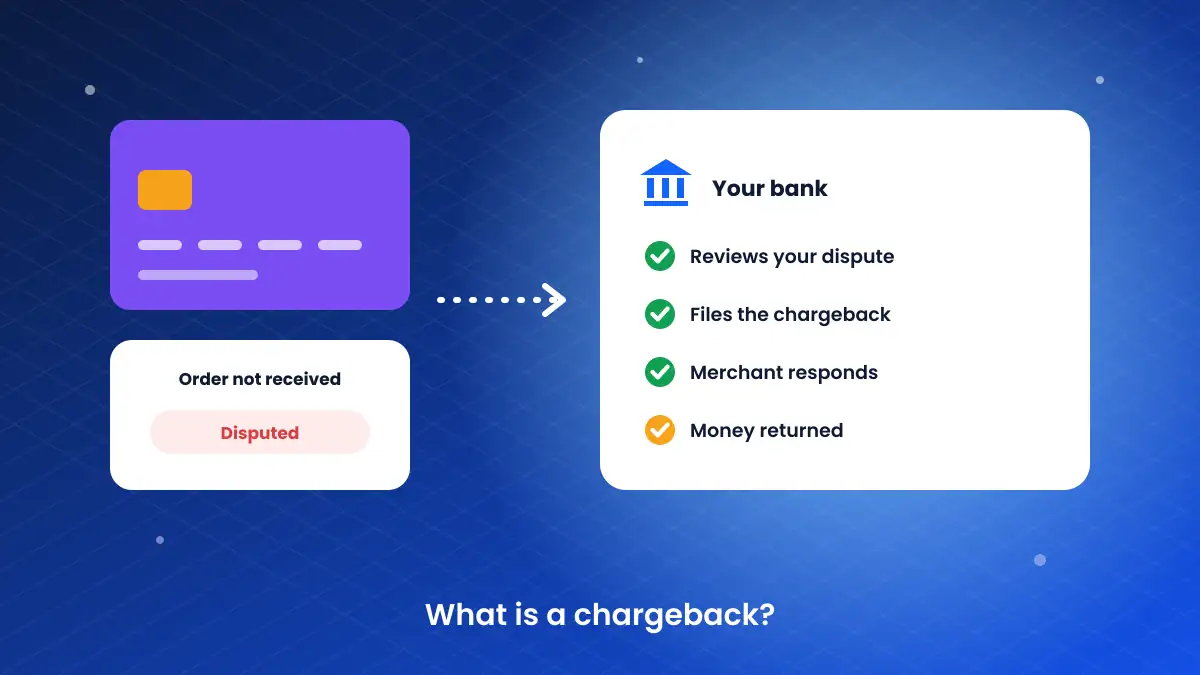
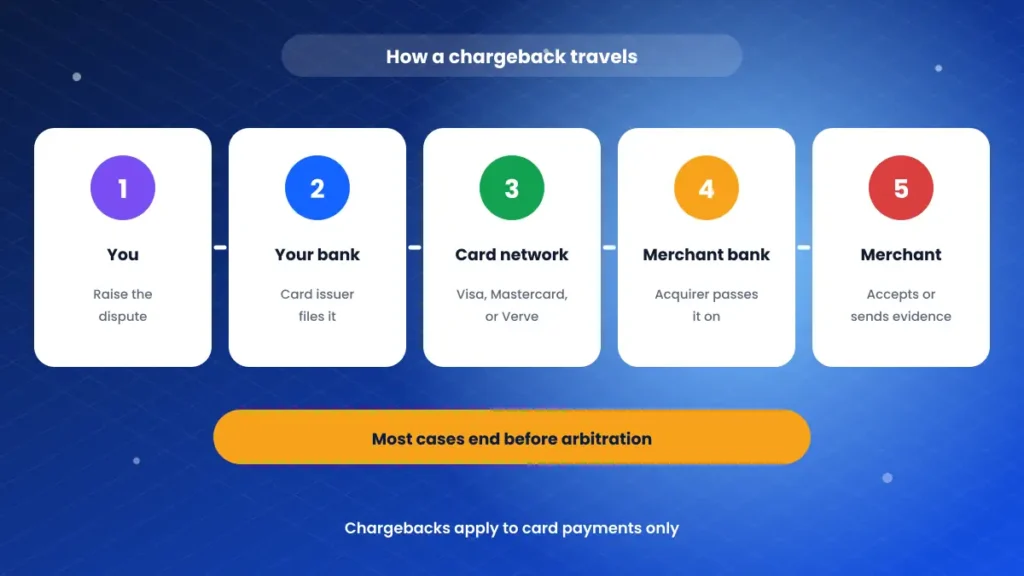
A chargeback is a reversal of a card payment that your bank starts on your behalf. Unlike a normal refund, the merchant does not choose to return the money. Instead, your bank, the card issuer, takes the money back through the card network, such as Visa, Mastercard, or Verve.
In simple terms, the chargeback system protects card users when a merchant gets something wrong and will not fix it. For example, Customer 1 orders a phone case from Your Business online, pays by card, and nothing arrives after weeks of waiting. If Your Business ignores the complaint, Customer 1 can ask the bank to raise a chargeback.
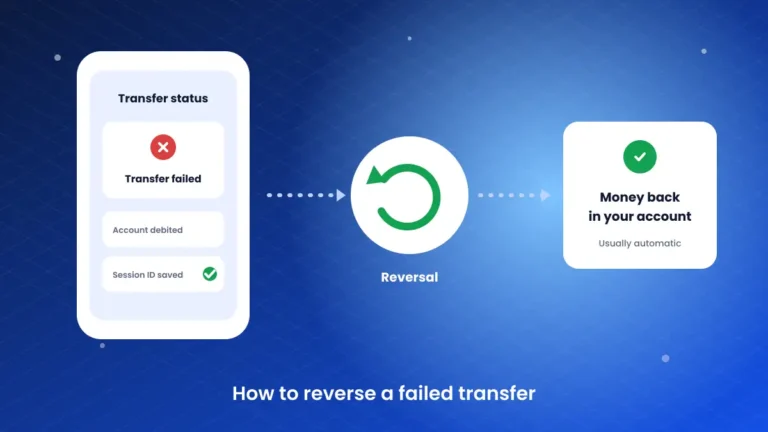
Chargebacks only apply to card payments. A bank transfer works differently, so our guide on how to reverse a failed transfer explains the options for transfers.
How a chargeback works
Several parties take part in every chargeback:
- You raise a dispute. First, you contact your bank, the card issuer, and explain what went wrong.
- Your bank reviews it. Next, the bank checks the payment, the reason, and your evidence.
- The bank files the chargeback. If the case is valid, your bank sends it through the card network to the merchant’s bank, the acquirer.
- The merchant responds. The acquirer passes the claim to the merchant, who can accept it or send evidence to fight it.
- A decision is made. Finally, the money stays with you, or it goes back to the merchant if their evidence is stronger.
For Mastercard, the stages are the first chargeback, the merchant’s second presentment, pre-arbitration, and finally arbitration, where Mastercard decides, according to Chargeback Gurus. Most cases end long before arbitration.
When you can ask for a chargeback
Card networks group chargeback reasons into a few common types:
| Reason | Example | Evidence that helps |
|---|---|---|
| Fraud or unauthorised payment | A charge you did not make, after your card details were stolen | A statement showing the charge, and confirmation that you still hold the card |
| Goods or services not received | An online order that never arrived | The order confirmation, delivery promises, and your messages to the merchant |
| Not as described | A product that is broken or very different from the advert | Photos, the product listing, and your return attempt |
| Cancelled or refund not processed | A subscription you cancelled, or a refund the merchant promised but never sent | Your cancellation message, and the merchant’s refund promise |
| Processing errors | You were charged twice, or charged the wrong amount | Your statement showing both charges or the correct price |
However, a chargeback is not for buyer’s remorse. If you simply changed your mind, the merchant’s own refund policy applies instead.
How to dispute a card payment, step by step
Follow these steps to give your chargeback the best chance:
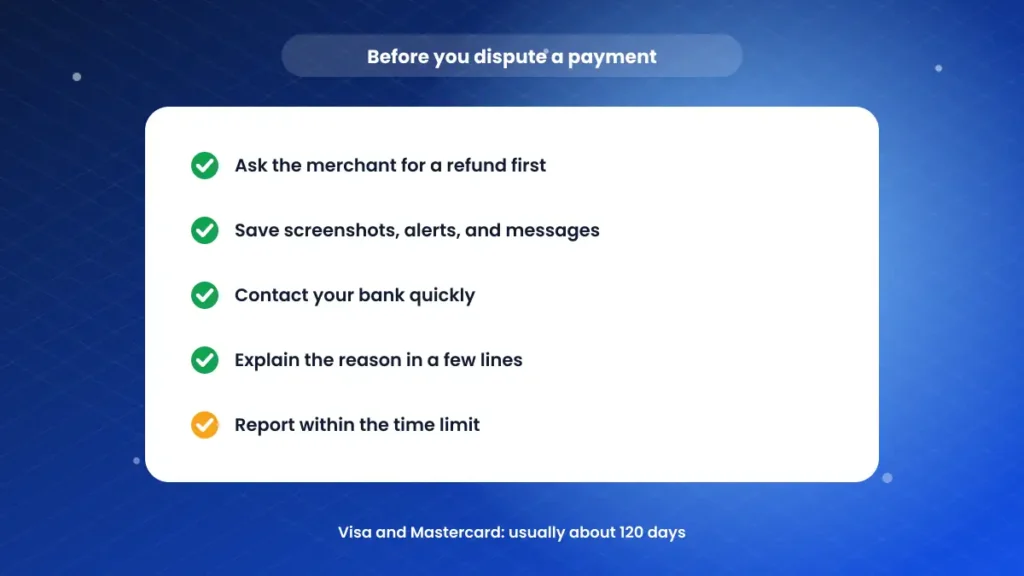
- Contact the merchant first. Explain the problem politely, and ask for a refund. Banks often want to see that you tried, and many problems end here.
- Collect your evidence. For instance, save screenshots of the order, the payment alert, delivery updates, and every message with the merchant.
- Contact your bank quickly. Use the bank’s app, email, or customer care line. Say that you want to dispute a card payment, and give the date, amount, and merchant name.
- Explain the reason clearly. Choose the reason that fits best, such as “item not received” or “charged twice”, and keep your story short and factual.
- Send your evidence. Attach the documents your bank asks for, and keep a copy of everything you send.
- Note your reference number. Write down the complaint number, and follow up if you hear nothing.
- Wait for the outcome. Some banks give a temporary credit while they investigate, but the final result can take weeks.
If you think your card details were stolen, also block the card at once in your banking app. Our guide on how to protect your bank account online covers the next steps.
Chargeback time limits
Time matters. For Visa, cardholders generally have up to 120 days to file a dispute, and the clock can start from the payment date, the expected delivery date, or the date you noticed a fraudulent charge, according to ClearSale. Similarly, Mastercard allows disputes up to 120 days after the transaction in most cases.
In practice, your own bank may set shorter internal deadlines, and local card schemes can have their own rules. So report a problem as soon as you notice it, rather than waiting until the end of the window.
| Stage | Typical time |
|---|---|
| You report the dispute (Visa, Mastercard) | Usually within 120 days |
| Merchant responds (Visa) | About 30 days |
| Merchant responds (Mastercard) | 45 days for the second presentment |
| Final outcome | Several weeks, sometimes longer |
If your bank does not help
If your bank refuses or does not reply, ask for a written explanation first. Then, if you are in Nigeria, you can escalate an unresolved complaint to the Central Bank of Nigeria’s Consumer Protection Department. A Brands.ng guide lists consumerprotection@cbn.gov.ng and the CBN’s online complaint portal, and it advises sending your bank complaint reference and supporting documents. However, check the current contact details on the official CBN website before you send anything.
What a chargeback means for merchants
For a merchant, every chargeback means lost money, a lost product, and often a fee from the acquirer. Too many chargebacks can also lead to higher fees or a closed merchant account. Our free chargeback ratio calculator shows how close a business is to the warning levels.
To reduce chargebacks, merchants can:
- Use a clear business name on card statements, so customers recognise the charge.
- Answer complaints quickly, and refund fairly before a customer goes to the bank.
- Keep proof of delivery, such as tracking updates and signed delivery notes.
- Describe products honestly, with real photos and clear return rules.
- Watch for fraud signs, such as unusual orders or mismatched delivery details.
Chargebacks and fraud to avoid
Do not raise a chargeback for something you received and used. This is called “friendly fraud”, and banks can reject the claim or close your account if they find it. Likewise, be careful of anyone who offers to “recover” money for a fee, because that is often a second scam. Our guide to authorised push payment fraud explains why transfers you approved are harder to recover than card payments.
Frequently asked questions
Is a chargeback the same as a refund?
No. A merchant chooses to give a refund, while a chargeback is forced through your bank and the card network when the merchant will not help.
Can I get a chargeback on a debit card?
Often, yes. Debit cards on networks such as Visa and Mastercard usually follow the same dispute rules as credit cards, although banks can handle them differently.
How long does a chargeback take?
Filing takes a few minutes, but the full process can take several weeks, especially if the merchant challenges it.
Can a merchant reverse a chargeback?
A merchant cannot simply reverse it, but they can send evidence. If their evidence is stronger, the money may go back to them.
Can I dispute a bank transfer the same way?
No. Chargebacks apply to card payments only. For a transfer, contact your bank at once and ask about its transfer dispute process.
Key takeaways on chargebacks
- A chargeback reverses a card payment through your bank when a merchant will not fix a problem.
- Common reasons include fraud, goods not received, items not as described, and double charges.
- Contact the merchant first, then your bank, and send clear evidence.
- For Visa and Mastercard, cardholders generally have about 120 days, but report problems early.
- Never use a chargeback for something you received and used.
Want to understand card payments better? Read our guides on why card transactions get declined and how card settlement works, or browse all our digital payments guides.