At many online shops in Nigeria, you can skip the card form and pay straight from your bank account instead. Around the world, this way of paying is growing fast, and it has a name: pay by bank. This guide explains what it is, how it works, how it compares with cards, where it is booming, and how to use it safely.
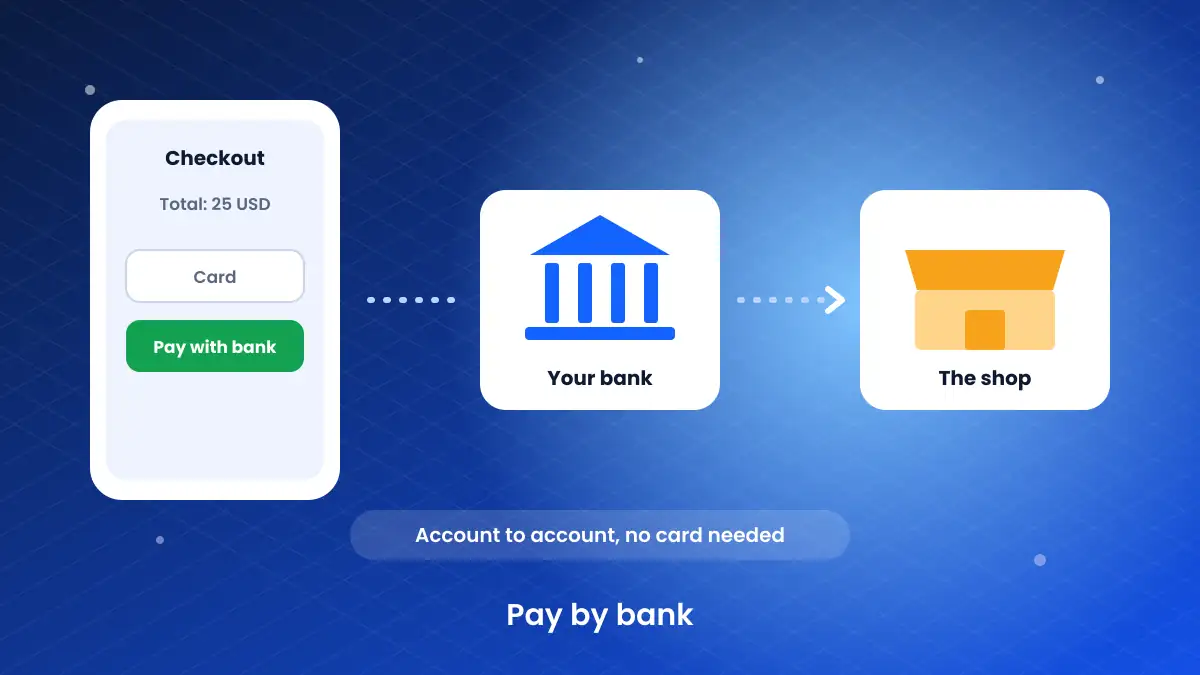
Quick answer: Pay by bank lets you pay a shop or service straight from your bank account, without a card. The money moves account to account, usually in seconds, and you approve each payment in your banking app or with a one-time code. As a result, shops often pay lower fees, and you never type in card details.
In this guide
- What is pay by bank?
- How pay by bank works
- The main types
- Pay by bank vs card payments
- Why it is growing worldwide
- Pay by bank in Nigeria
- Benefits for shoppers and shops
- Risks and how to stay safe
- Frequently asked questions
- Key takeaways on pay by bank
What is pay by bank?
Pay by bank is a payment method that moves money directly from your bank account to a merchant’s account. People also call it account-to-account, or A2A, payments. Unlike a card payment, no card network sits in the middle of the payment.
In practice, it shows up as a button at checkout, such as “Pay with bank” or “Pay with transfer”. You choose it, confirm the payment with your bank, and the merchant gets the money. Our guide to how bank transfers work explains the rails underneath.
In short, pay by bank turns an everyday bank transfer into a checkout option.
How pay by bank works
There are a few versions, but a typical payment follows five steps:
- Choose the bank option. First, you pick it at checkout instead of a card.
- Pick your bank. Next, you select your bank, or the shop shows you an account to pay into.
- Approve the payment. Then, you confirm the amount in your banking app, with a one-time code, or by sending a transfer.
- The money moves. After that, an instant payment system moves the money from your account to the merchant’s.
- The shop confirms. Finally, the merchant’s payment provider confirms the payment, and your order goes through.
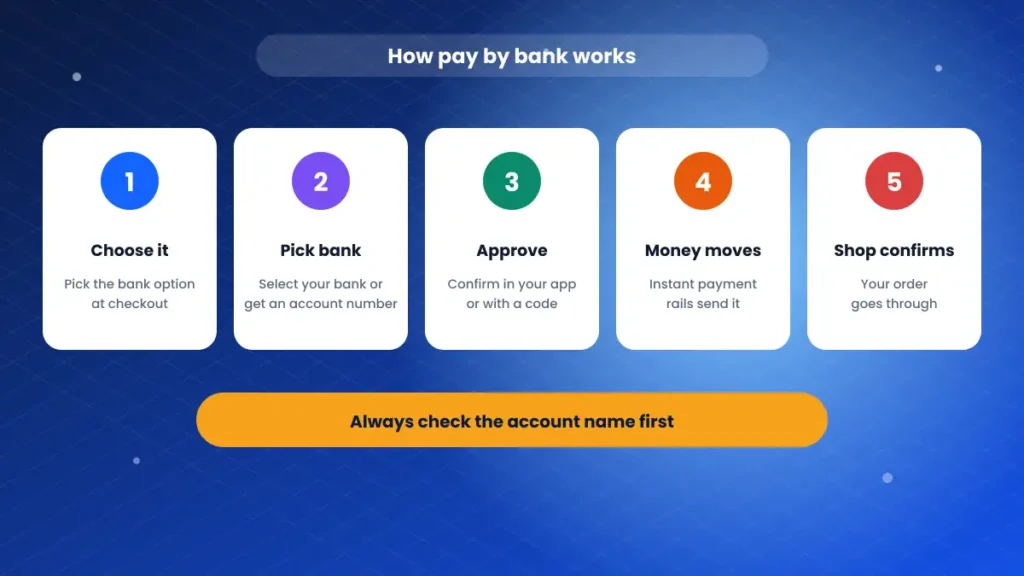
Importantly, you never share card details with the shop. Instead, your bank confirms that it is really you.
The main types
It comes in a few forms, depending on the country and the provider:
| Type | How you pay | Where it is common |
|---|---|---|
| Pay with transfer | You send a transfer to a one-time account number | Nigeria |
| Bank login | You approve the payment in your bank app or with a code | Nigeria, UK, Europe |
| Open banking payment | An approved app starts the payment, and you approve it | UK, Europe |
| QR or alias payment | You scan a code or use a phone number or key | Brazil, India |
In Nigeria, payment gateways offer the first two. For example, Paystack’s “Pay with Transfer” creates a temporary account number for each payment, which stops working after the payment or after up to eight hours. Our guide to what a virtual account is explains how these numbers work.
Similarly, open banking lets approved apps start payments with your consent. Our guide to open banking in Nigeria explains the CBN’s rules.
Pay by bank vs card payments
Here is how it compares with paying by card:
| Feature | Card payment | Pay by bank |
|---|---|---|
| Card details needed | Yes | No |
| Who moves the money | Card networks | Banks, through instant payment systems |
| Speed for the shop | Settles in one or more days | Often instant |
| Fees for the shop | Usually higher | Often lower |
| Chargebacks | Yes, through your card issuer | Limited, depending on the country |
| Card limits apply | Yes | No, your bank transfer limits apply |
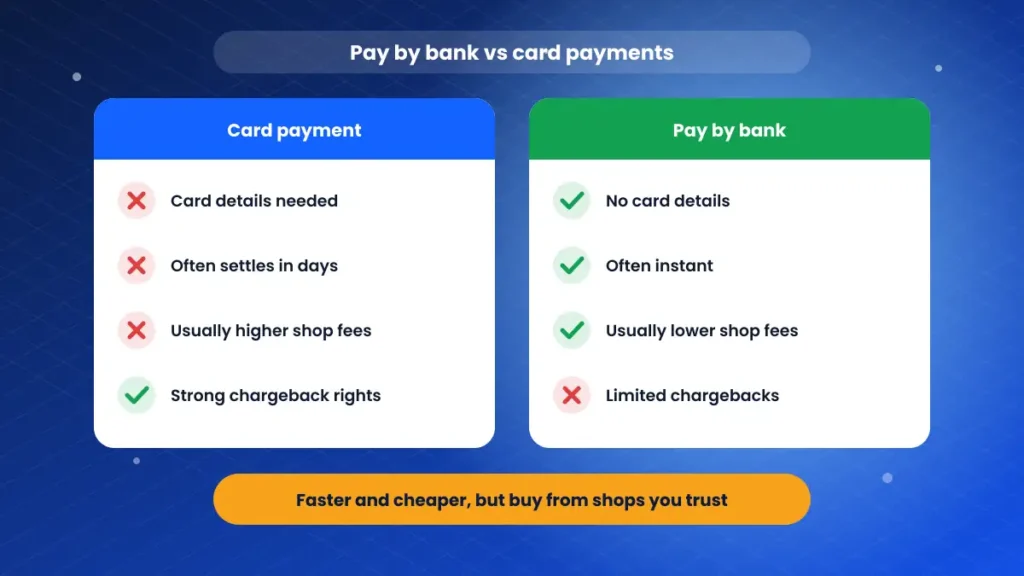
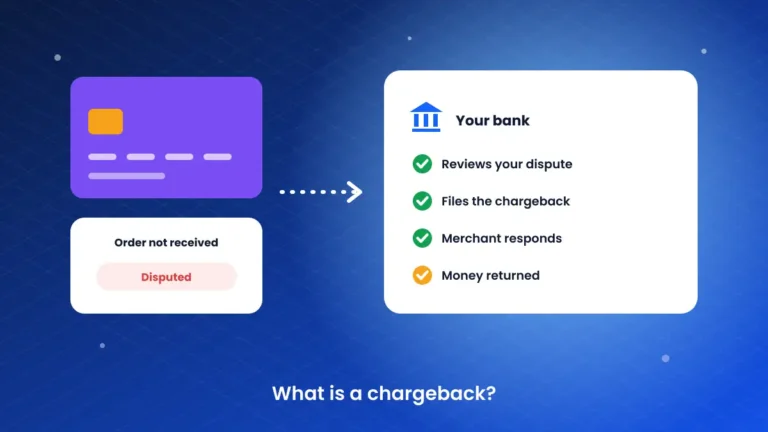
Still, cards keep one big advantage. If something goes wrong, you can usually ask your card issuer for a chargeback. With bank payments, refunds usually depend on the merchant, so buy only from shops you trust.
Why it is growing worldwide
Pay by bank is booming wherever countries have fast, cheap instant payment systems:
- India. For example, the UPI system handled a record 24.51 billion transactions in August 2026, Business Standard reported.
- Brazil. Likewise, Pix carried 55.2% of all payments by number in the first half of 2026, central bank data reported by The Rio Times shows.
- United Kingdom. Meanwhile, UK open banking passed one billion payments in July 2026, with over 40 million in June alone.
There are three main reasons. First, shops save on card fees. Second, money arrives faster. Third, people already trust their banking apps. Moreover, payment standards for AI shopping assistants now support bank payments too, as our guide to agentic commerce explains.
Pay by bank in Nigeria
Nigeria already has strong foundations for pay by bank. The NIBSS Instant Payment (NIP) system settles most transfers in under a second, and it processed about 11.2 billion transactions in a year, according to NIBSS. As a result, many Nigerians already pay for goods by transfer. Some shops also let you scan a QR code instead, as our guide on how to pay with NQR explains. Since 2025, the CBN has also required these payment messages to use the ISO 20022 standard.
Next, NIBSS is rolling out a National Payment Stack to replace NIP over time. According to a Daily Trust report, the new system supports request-to-pay, direct debits, and better merchant collections, and it had processed 26.55 million transactions by August 2026. These features could make checkout payments smoother.
Finally, open banking could let approved apps start payments for you, with your consent, once the CBN’s phased rollout reaches payments.
Benefits for shoppers and shops
For shoppers and businesses, pay by bank offers clear benefits:
- No card needed. You can pay even if your card has expired, is blocked, or has a low limit.
- Fewer card details to steal. Because you never type in a card number, hackers have less to take.
- Faster money for shops. Merchants often get paid in seconds, which helps cash flow.
- Lower costs. Bank payments usually cost shops less than card payments.
- Clear approval. You approve every payment yourself in your banking app.
For businesses, our guide on how to accept online payments covers the main options.
Risks and how to stay safe
It is safe when you use it carefully, but scammers target transfers too. Follow these steps:
- Start from the shop’s real checkout. Only pay through the official checkout, not through account numbers sent by chat or email.
- Check the name. Before you confirm, make sure the account name matches the business.
- Pay the exact amount. Otherwise, a wrong amount may be rejected or delayed.
- Watch the time limit. One-time account numbers expire, so do not reuse an old one.
- Beware of fake alerts. As a seller, confirm the money is in your account before you release goods. Our guide on how to spot a fake bank alert shows you how.
- Never share your PIN or codes. Your bank will never ask for them.
Frequently asked questions
Is pay by bank the same as a bank transfer?
Mostly, yes. It uses bank transfer rails, but it is built into the checkout, so the shop can confirm your payment automatically.
Is this method safe?
Yes, when you use the official checkout. You approve each payment with your bank, and the shop never sees your card details. However, check the account name before you pay.
Can I get a refund?
Usually, yes, but the shop sends the refund. Unlike cards, chargeback rights are limited, so buy from trusted shops.
Do I need a card?
No. You only need a bank account and your banking app, internet banking, or a phone that can receive a one-time code.
Why do some shops prefer it?
Because it often costs less than cards and the money arrives faster. Some shops also avoid card declines this way.
Key takeaways on pay by bank
- Pay by bank moves money straight from your bank account to a shop, without a card.
- You approve each payment with your bank, and the money often arrives in seconds.
- Shops usually pay lower fees, but cards still offer stronger chargeback rights.
- Pay by bank is booming in India, Brazil, and the UK, and Nigeria’s instant payment rails are ready for it.
- Always pay through the official checkout, check the account name, and watch for fake alerts.
Want to learn more about how payments are changing? Read our guides to network tokenisation and stablecoin payments, or browse all our digital payments guides.