Many people now leave their wallet at home and pay with their phone instead. They tap at a shop, scan a QR code, or send money from an app in seconds. So, what is a digital wallet? This guide explains it in simpler terms, shows how it works, covers the main types, and explains how to use one safely.
Quick answer: A digital wallet is an app or online service that stores your payment details, money, or cards, so you can pay or send money with your phone or computer instead of cash or a physical card. Some wallets, such as Apple Pay and Google Wallet, store your bank cards securely. Others, such as mobile money and fintech wallets, hold a balance you top up. To stay safe, lock the app, never share your PIN or OTP, and use only licensed providers.
In this guide
- What is a digital wallet?
- How a digital wallet works
- Types of digital wallets
- How popular are digital wallets?
- Benefits of a digital wallet
- Risks of digital wallets
- How to use a digital wallet safely
- Frequently asked questions
- Key takeaways on what is a digital wallet
What is a digital wallet?
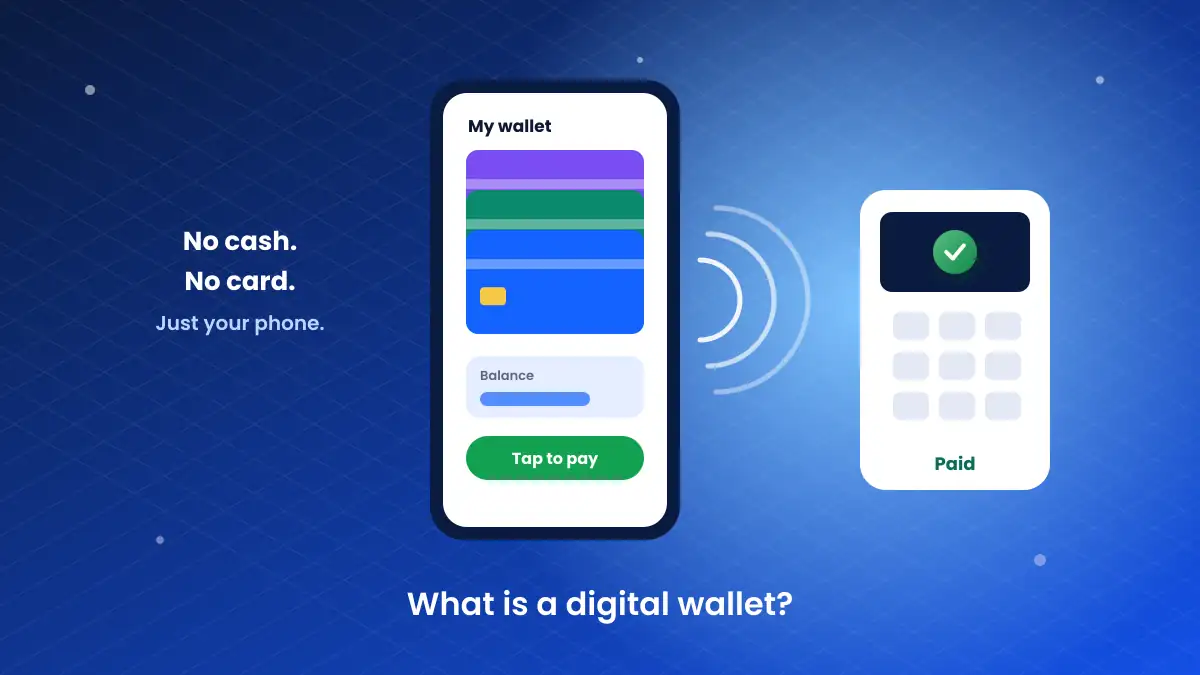
A digital wallet, also called an e-wallet or mobile wallet, is software that does the job of a leather wallet on your phone or computer. It can hold card details, a money balance, loyalty cards, tickets, or even digital IDs.
When you pay, the wallet sends the payment details for you. As a result, you do not need to carry cash, type your card number, or hand your card to anyone. The same tokens now let AI shopping assistants pay safely, as our guide to agentic commerce explains.
Digital wallets are one part of fintech. Our guide to what fintech is explains the wider picture, and our guide to digital banking covers bank apps.
How a digital wallet works
Here is what usually happens:
- You set up the wallet. First, download the app and verify your identity, usually with your phone number, BVN, or NIN.
- You add money or a card. Next, you either link a debit card or top up a balance by bank transfer.
- The wallet protects your details. Instead of your real card number, it stores a “token”, which is a stand-in number.
- You pay. Then you tap your phone, scan a QR code, or confirm a payment in the app.
- You confirm it is you. For example, you enter a PIN or use your fingerprint or face.
- The payment goes through. Finally, the bank or wallet provider approves it, and you get a receipt in the app.
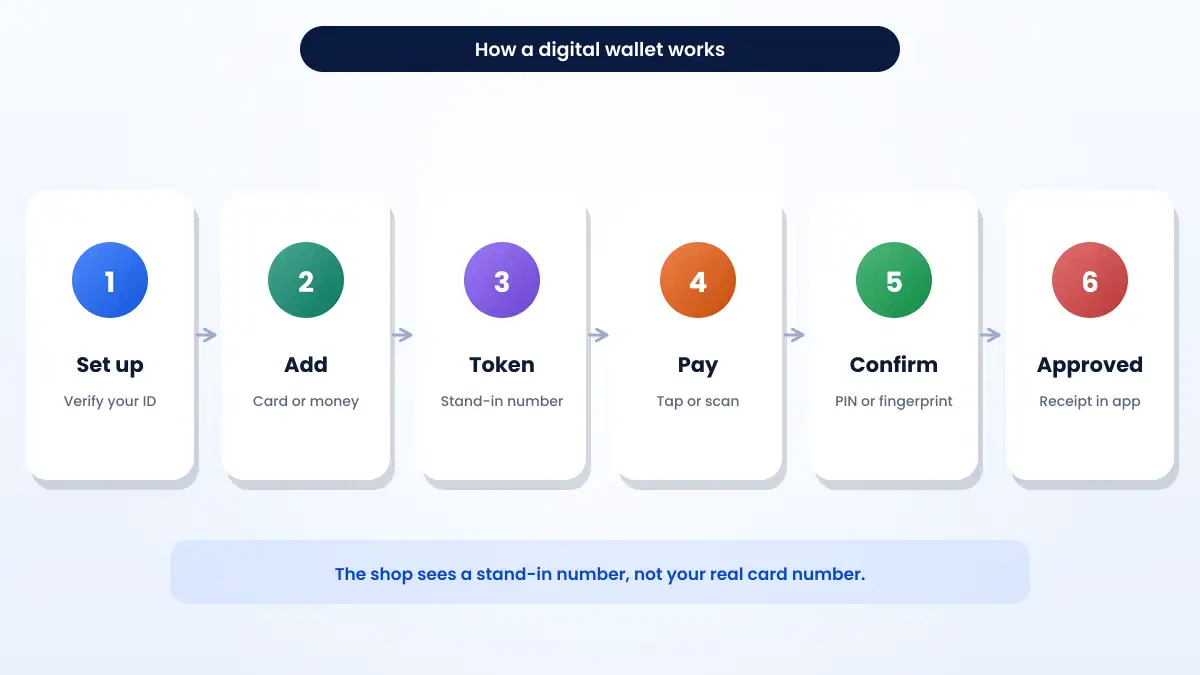
That stand-in number is the key safety feature. According to Mastercard, tokenisation replaces the number on your payment card with a stand-in number, so the merchant never sees or stores your real card number. Our guide to network tokenisation explains how these tokens work. Contactless wallets also use the same technology as tap-to-pay cards. Our guide to contactless payment explains how it works. Shops can even accept these phone taps on their own phones, using SoftPOS.
Types of digital wallets
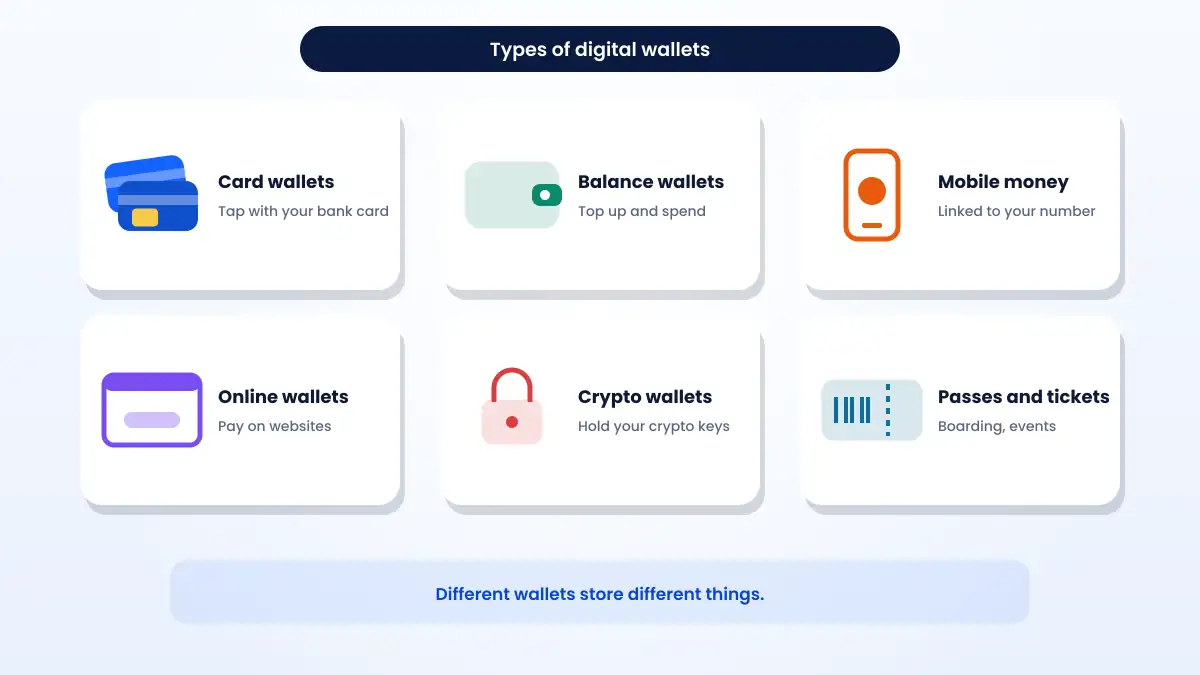
There are several kinds of digital wallets:
| Type | How it works | Examples |
|---|---|---|
| Card wallets | Store your bank cards and let you tap or pay online | Apple Pay, Google Wallet, Samsung Wallet |
| Balance wallets | Hold money that you top up and spend | Fintech and payment app wallets |
| Mobile money | Store money linked to your phone number | Mobile money services run by telecom and payment companies |
| Online payment wallets | Let you pay on websites without typing card details | PayPal and similar services |
| Crypto wallets | Hold the keys to your cryptocurrency | Software and hardware crypto wallets |
In Nigeria, many people use fintech wallets that come with an account number, so friends can send money by ordinary bank transfer. Crypto wallets work differently because they hold keys rather than money. Our guide to blockchain technology explains why. Some central banks are also testing their own digital currencies, as our guide to what a CBDC is explains.
How popular are digital wallets?
Use is growing fast. Mobile money alone handled more than $2 trillion in transactions worldwide in 2025, according to the GSMA. The industry body also counted 2.3 billion registered mobile money accounts, and it said most new accounts came from sub-Saharan Africa.
Benefits of a digital wallet
- Convenience. Pay with the phone you already carry.
- Speed. Tap, scan, or send money in seconds.
- Safety. Tokens hide your real card number, and a lost phone can be locked remotely.
- Records. Every payment appears in the app, so you can track spending easily.
- Access. People without a bank card can still pay and receive money through mobile money or app wallets.
Risks of digital wallets
However, digital wallets also have risks:
- Phone loss or theft. An unlocked phone can give a thief access to your money.
- Scams. Fraudsters send fake links, call pretending to be support staff, or ask for your OTP.
- SIM swap fraud. Criminals may hijack your phone number to reset your wallet. Read how SIM swap fraud works.
- Unlicensed providers. Some apps are not regulated, so your money may not be protected.
- Outages. Network or app problems can delay payments.
How to use a digital wallet safely
Follow these habits to keep your money safe:
- Choose a licensed provider. In Nigeria, check that the wallet company holds a CBN licence.
- Lock your phone and the app with a strong PIN, fingerprint, or Face ID.
- Never share your PIN, OTP, or password, even with someone who says they work for the provider.
- Turn on alerts for every payment, so you spot strange activity quickly.
- Update your phone and app whenever updates arrive.
- Check payment requests carefully before you confirm, especially QR codes from strangers.
- Act fast if your phone is lost. Call your provider and bank, and lock the account at once.
For more tips, see how to protect your bank account online.
Frequently asked questions
Is a digital wallet the same as a bank account?
Not always. Some wallets only store your bank cards, so the money stays in your bank account. Others hold a balance with a licensed fintech or mobile money provider.
Is a digital wallet safer than a card?
It can be. Wallets use tokens and need your PIN, fingerprint, or face to pay, so a thief cannot easily use them. However, you must still protect your phone and login details.
Can I use a digital wallet without the internet?
It depends on the wallet. Many need data, but some mobile money services work through USSD codes on basic phones.
What happens if I lose my phone?
Contact your wallet provider and bank immediately to lock your account. If your phone has a screen lock, a thief will also struggle to open the wallet.
Are crypto wallets the same as other digital wallets?
No. Crypto wallets store the keys to your cryptocurrency, not money in a bank or fintech account. If you lose those keys, you may lose access to your crypto for good.
Key takeaways on what a digital wallet is
- A digital wallet is an app or online service that stores cards or money so you can pay with your phone or computer.
- Card wallets use tokens, so merchants never see your real card number.
- The main types are card wallets, balance wallets, mobile money, online payment wallets, and crypto wallets.
- Mobile money alone handled more than $2 trillion in 2025, according to the GSMA.
- Lock your phone and app, use licensed providers, and never share your PIN or OTP.
Want more simple explanations? Browse all our Digital Explained guides, or learn about debit, credit, and prepaid cards.