If you have sent money with a bank app, paid a trader by transfer, or bought airtime on your phone, you have already used fintech. So, what is fintech? This guide explains it, walks through the main types with real examples, shows how fintech is changing banking in Nigeria and beyond, and covers the risks to watch for.
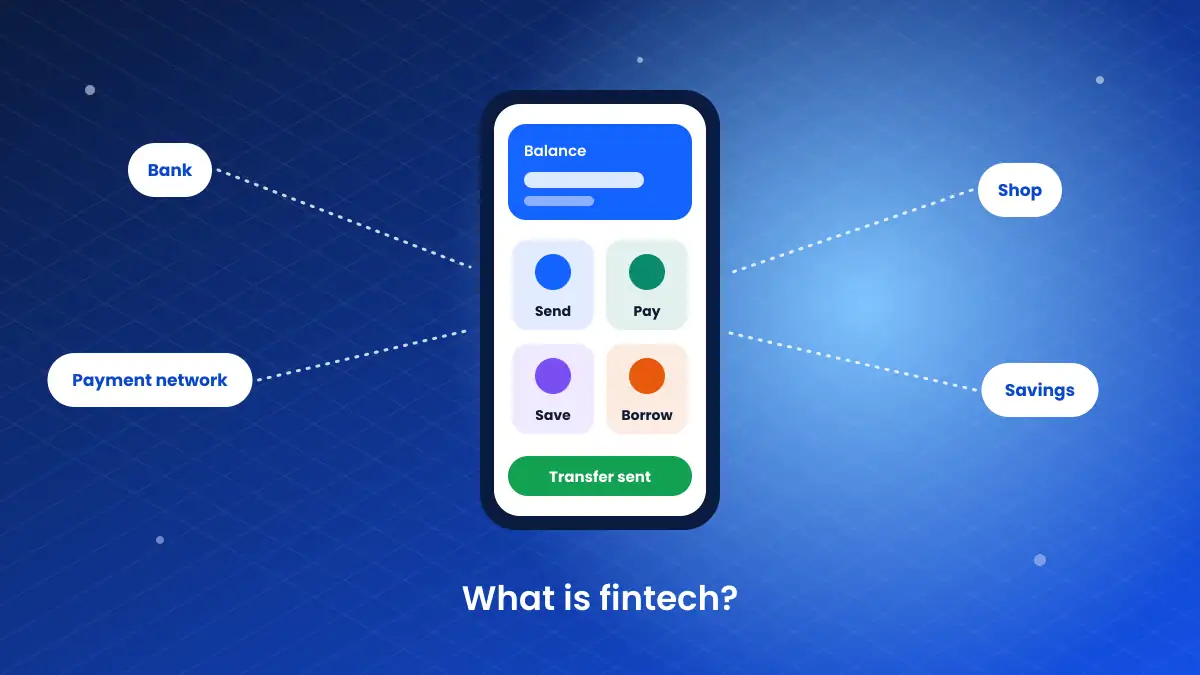
Quick answer: Fintech, short for financial technology, means using software, apps, and the internet to deliver financial services such as payments, savings, loans, insurance, and investing. Fintech companies make these services faster, cheaper, and easier to reach, often from a phone. Examples include mobile banking apps, payment gateways, POS agent networks, digital lenders, and savings apps. In Nigeria, instant bank transfers reached nearly 11 billion transactions in 2024.
In this guide
- What is fintech?
- How fintech works
- Types of fintech
- Everyday examples in Nigeria
- How fintech is changing banking
- Benefits and risks
- How to stay safe with money apps
- Frequently asked questions
- Key takeaways on what is fintech
What is fintech?
Fintech is short for “financial technology”. It covers any technology that changes how people save, spend, send, borrow, or invest money. The International Monetary Fund (IMF), in a 2017 article by Christine Lagarde, described fintech as the collection of new technologies whose uses may affect financial services.
The word can describe two things. First, it can mean the technology itself, such as a mobile payment system. Second, it often refers to the companies that build these services, commonly called fintechs.
The idea is not new. In fact, cards, ATMs, and online banking were all once new financial technology. However, smartphones, cheap data, and cloud computing have made today’s services much faster to build and far easier to reach. Our guide to what cloud computing is explains that last part.
As a result, a small team can now launch a payment or savings app in months rather than years. That is why so many new money apps have appeared in Nigeria and across Africa since the mid-2010s.
How fintech works
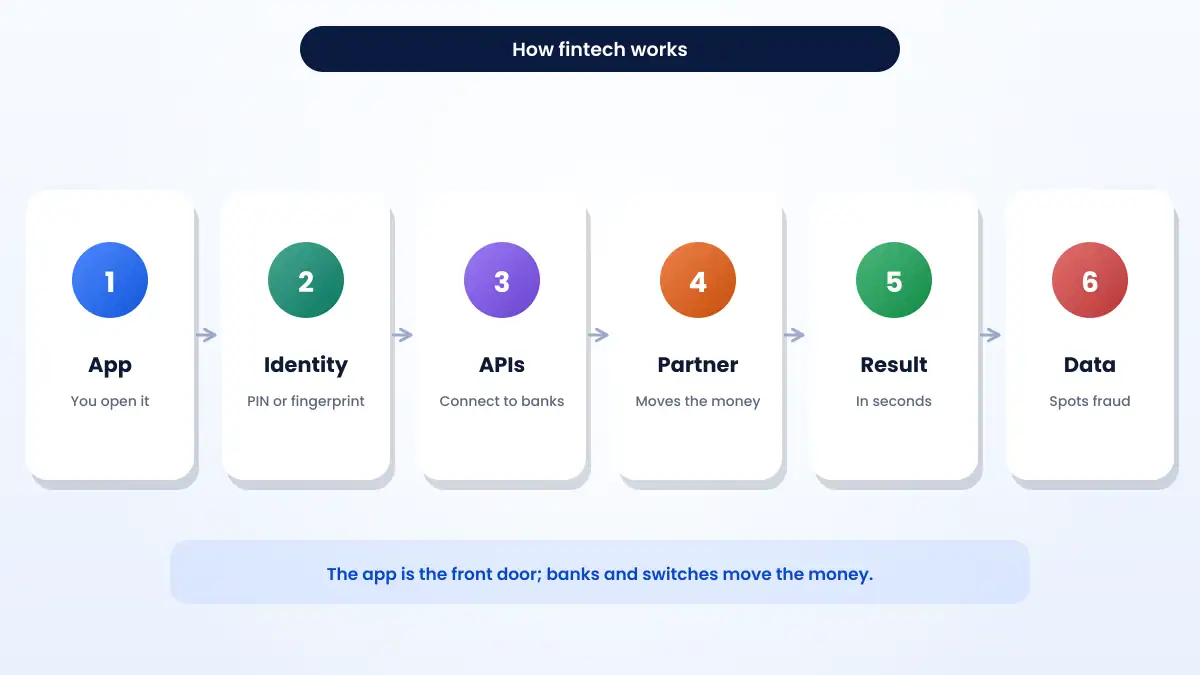
Although each app is different, most follow the same basic pattern:
- You use an app or website. For example, you open a payment app to send money or pay a bill.
- The app checks who you are. It confirms your identity with your BVN, NIN, password, PIN, or fingerprint. Our guide to what a BVN is explains the first of these.
- It talks to other systems through APIs. The app connects to banks, card networks, or payment switches. Our guide to what an API is explains these connections.
- A licensed partner moves the money. Meanwhile, behind the scenes, a bank, switch, or licensed payment company settles the transaction.
- You get a result in seconds. Finally, the app confirms the payment and updates your balance.
- Data improves the service. Over time, the provider uses transaction data to spot fraud, approve loans, or suggest better products.
Types of fintech
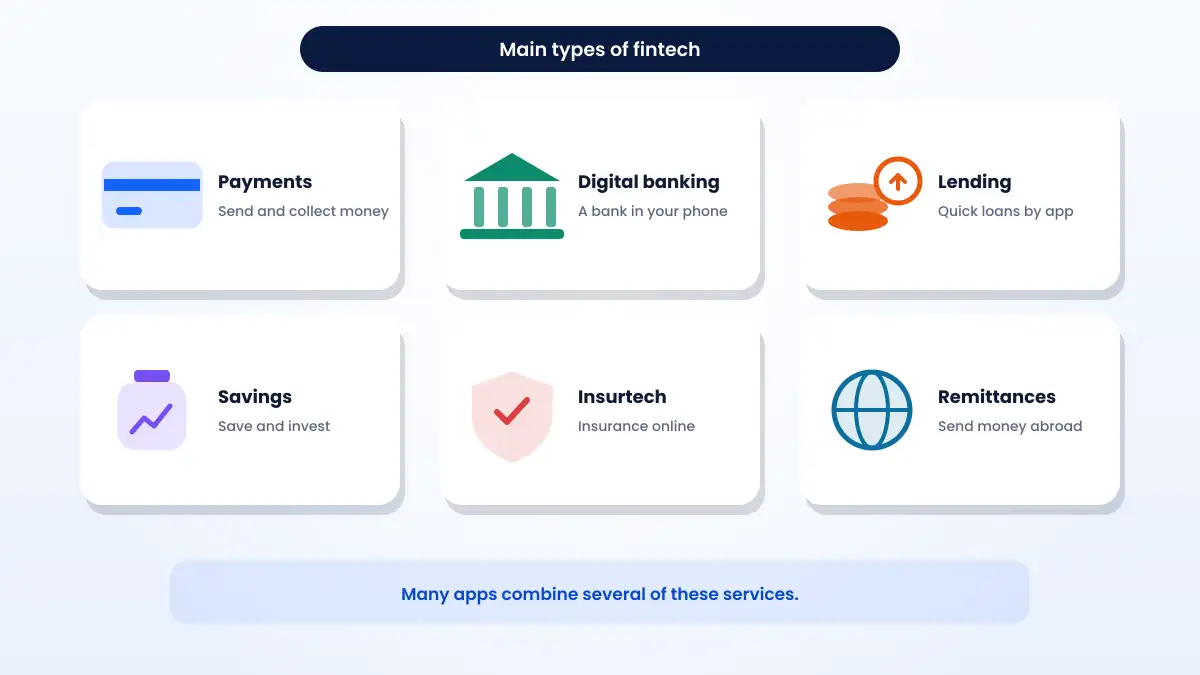
Financial technology covers many kinds of services. For example, here are the main types, with examples you may know. A newer trend, agentic commerce, even lets AI agents shop and pay for people:
| Type | What it does | Examples |
|---|---|---|
| Payments | Send, receive, and collect money | Bank transfer apps, POS terminals, payment gateways |
| Digital banking | Full bank accounts on your phone | Mobile-first banks and microfinance banks |
| Lending | Quick loans decided by software | Loan apps, buy now, pay later services |
| Savings and investing | Save, invest, or buy shares from an app | Savings apps, investment platforms |
| Insurtech | Buy and claim insurance online | Health and device insurance apps |
| Remittances | Send money across borders | International transfer apps |
| Regtech | Help firms meet rules, such as identity checks | KYC and fraud-check tools |
| Digital assets | Buy, sell, or store crypto and tokens | Crypto exchanges and wallets |
In practice, many providers offer several of these at once. For instance, one app might handle payments, savings, and small loans together. Many of these apps work as digital wallets, and our guide to what a digital wallet is explains how they work.
Everyday examples in Nigeria
In fact, you probably use these services every day:
- Instant transfers. When you send money from your bank app, it usually travels through the NIBSS Instant Payment system. Our guide on how bank transfers work explains the steps.
- POS agents. Agents in markets and on the streets use card terminals to offer cash withdrawals, transfers, and bill payments. See how POS transactions work.
- Online checkouts. A payment gateway lets online shops accept cards, transfers, and USSD payments.
- Virtual accounts. Some services give each customer a temporary account number, so the system matches payments automatically. Our guide to virtual accounts explains how.
- Airtime and bills. Similarly, apps let you buy airtime, pay for electricity, or renew TV subscriptions in seconds.
The scale is also large. According to the Central Bank of Nigeria’s first fintech report, as reported by Financial Afrik, the NIBSS Instant Payment platform handled nearly 11 billion transactions in 2024, up from around 5 billion in 2022.
How fintech is changing banking
Financial technology has changed what people expect from their bank. As a result, traditional banks now compete with apps on speed and convenience.
- Banking without a branch. You can open an account, get a card, and save money without visiting a bank hall. Our guide to what digital banking is explains how it works.
- Faster payments. Transfers that once took days now usually arrive in seconds, day or night.
- Wider reach. Meanwhile, agent networks bring basic banking to towns and villages with few branches.
- Cheaper services. In addition, many apps charge lower fees, or none, for basic transfers.
- Better business tools. Small businesses can accept cards, take payments online, and track sales from one app.
- Partnerships. Many banks now work with fintechs instead of competing, for example by offering their services through APIs. Our guide to open banking in Nigeria explains how customers can share bank data with these apps.
Investors have also noticed. For example, Moniepoint, a Nigerian company that serves small businesses, reached a valuation of about $1 billion after a $110 million funding round in October 2024, TechCabal reported.
Benefits and risks
| Benefits | Risks |
|---|---|
| Fast payments at any time | Scams and fake apps |
| Lower fees for many services | Data privacy concerns |
| Banking from your phone | App outages and failed transfers |
| Easier access to small loans | Costly loans and debt traps |
| Useful tools for small businesses | Unlicensed providers |
How to stay safe with money apps
These apps are convenient, but they also attract fraudsters. Therefore, follow these habits:
- Check the licence. Use providers licensed by the CBN, or registered with the SEC for investments.
- Vet loan apps. In 2025, the Federal Competition and Consumer Protection Commission (FCCPC) issued the Digital, Electronic, Online, or Non-Traditional Consumer Lending Regulations, which require digital lenders to register and ban abusive recovery tactics. Avoid lenders that are not registered. Our guide to loan app scams shows how to check a lender and what to do if one harasses you.
- Download apps only from official stores, and check the developer name carefully.
- Turn on two-factor authentication and never share your PIN, OTP, or password.
- Confirm payments in your own app before you release goods. Our guide on how to spot a fake bank alert shows how.
- Be wary of “guaranteed” returns. Genuine investments never promise to double your money quickly.
For more safety tips, see how to protect your bank account online.
Frequently asked questions
What does fintech stand for?
It stands for financial technology. In other words, it describes technology, and the companies behind it, that deliver financial services in new ways.
Is a fintech the same as a bank?
Not always. Some hold banking or microfinance licences, while others offer services through a partner bank. So, check which licence the company holds and who keeps your money.
Are money apps safe?
Licensed apps can be safe, especially when they use strong security, and you protect your login details. Still, avoid unknown apps and anyone who asks for your PIN or OTP.
Who regulates these services in Nigeria?
Several bodies share the job. The CBN licenses banks and payment companies, the SEC oversees investments and digital assets, and the FCCPC regulates digital consumer lenders.
Is cryptocurrency part of it?
Yes. Digital assets and crypto exchanges are one branch of financial technology, although most money apps have nothing to do with crypto.
Key takeaways on what is fintech
- Fintech means using technology to deliver financial services such as payments, loans, savings, and insurance.
- Most of these apps connect to banks and payment systems through APIs, with a licensed partner moving the money. Our guide to embedded finance explains how non-bank apps use the same approach.
- The main types include payments, digital banking, lending, savings and investing, insurtech, and remittances.
- In Nigeria, instant transfers reached nearly 11 billion in 2024, according to the CBN’s fintech report.
- Use licensed providers, protect your PIN and OTP, and avoid unregistered loan apps.
Want more simple explanations? Browse all our Digital Explained guides, or learn what blockchain technology is.